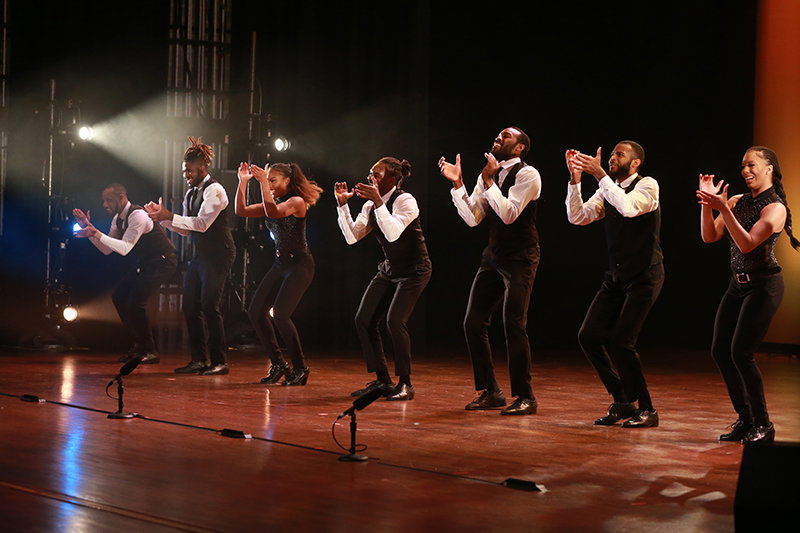
Dance is a universal language.
That’s why live performances often feel sacred: For an hour or two, differences fade away as the audience gets swept up in the same rhythm.
Step Afrika! puts that idea into motion, reminding us that rhythm doesn’t just come from music. It lives within us.
Stepping turns the body into an instrument. Through carefully layered claps, stomps, and call and response, dancers create “polyrhythms” that balance visual appeal, a powerful beat, and — perhaps most importantly — collective movement.
For founder C. Brian Williams, Step Afrika is about more than the spectacle.
“We want people to leave our theaters entertained, inspired, and perhaps having discovered something new about American culture — and about one another,” he says. “If we can bring people together through rhythm, movement, and joy, then we are doing something that matters far beyond the stage.”
Where Step Afrika! Started

Founded in 1994, Step Afrika! is now known as “the world’s leading authority on the art form of stepping.” It has garnered national attention as the first dance company inducted into the NACA Hall of Fame, a headliner at the White House’s inaugural Juneteenth Celebration, and Washington D.C.’s first and only “cultural ambassador.”
Stepping dates back to the early 1900s, when greater numbers of Black students began to attend colleges and universities. Drawing on elements of traditional African dance, fraternities and sororities developed the style as a form of empowerment, self-expression, and camaraderie.
Williams discovered stepping as a member of the Alpha Phi Alpha fraternity at Howard University. After graduating, he lived and worked in South Africa, where he noticed similarities between the stepping he’d practiced and the country’s traditional “gumboot” dance. That connection opened the door to a bigger opportunity: using dance to bridge cultures and generations, helping people explore their roots.
Step Afrika! got its start at a two-week festival in Johannesburg, which attracted more than 400 local youth, before making its way to the U.S. in 1996.
Over the past 32 years, the dance company has remained committed to an educational mission. Step Afrika! regularly performs at schools and leads workshops for elementary through high school students, teaching collaboration, cultural awareness, and creative thinking. Stepping inherently requires participants to listen to one another and work together, fostering a sense of belonging that Williams notes is rooted in resilience.
“Young people need opportunities to discover who they are, understand one another, and find their own voices,” Williams says. “When students experience stepping, they aren’t simply learning a dance form; they are engaging with a living cultural tradition and discovering that their own bodies, voices, and ideas are instruments of artistic expression.”
Detroit’s Turn to Step Up
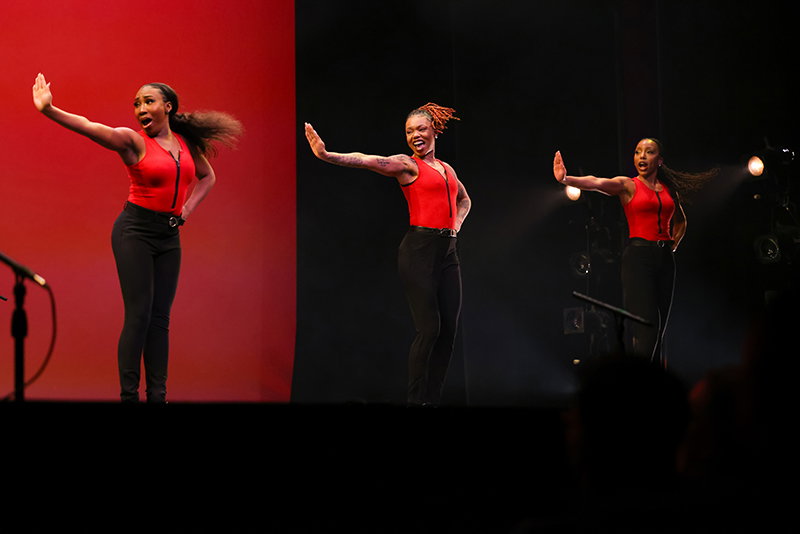
To date, Step Afrika! has performed in more than 60 countries and all 50 states. Nov. 14 marks the group’s second appearance in the Motor City, bringing four distinct dance styles to the Detroit Opera House.
Stepping remains the heart of the show. In fact, many of the company’s performers have a personal connection to the dance, having experienced it firsthand in their college days.
Artistic director Mfoniso Akpan fondly recalls stepping with her sorority, Delta Sigma Theta, at Stony Brook University. The experience led to tight-knit relationships, but it also instilled discipline that still guides her today.
“Years later, there’s something incredibly special about watching the next generation of artists in Step Afrika! bring that same tradition to stages across the world,” she says. “I still feel that same excitement, pride, and connection I felt when I was stepping myself. It’s a beautiful reminder that while the art form continues to evolve, the spirit, community, and traditions at its heart remain just as powerful.”
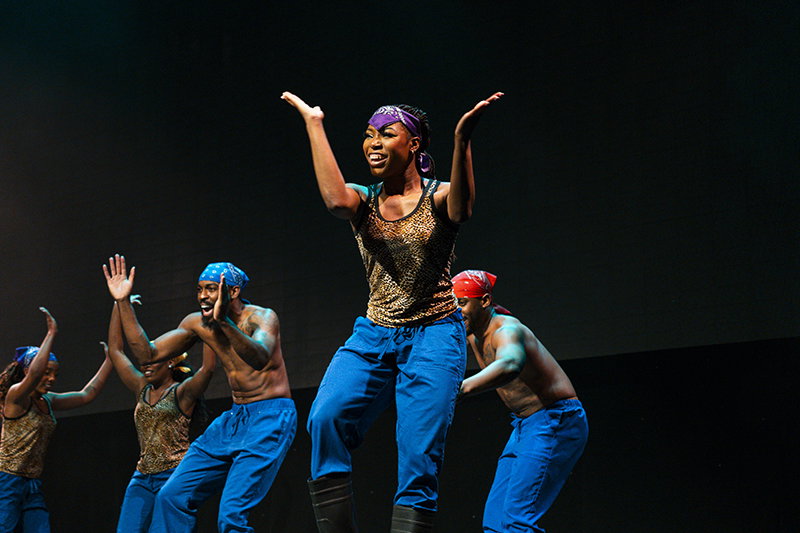
Alongside stepping, the show will feature traditional dances of the Zulu people, contemporary dance, and gumboot, a style typically performed in Wellington boots.
Gumboot originated among South African miners, who were often forbidden from speaking to one another while working underground. Instead, they developed a code of tapping, slapping, and stomping their boots to communicate. That language has since evolved into a celebrated tradition, still alive in festivals and South African street performances today.
Across each style, rhythm is the common thread. The dancers’ synchronized movements make for quite the show, exemplifying the unity dance strives to create.
Each performance brings together a diverse group of accomplished performers, with backgrounds spanning tap, hip-hop, jazz, and other dance styles, along with acting, singing, and percussion. Though stepping anchors the show, the company’s multidisciplinary artistry adds depth to an experience centered on storytelling.
Audience Participation
Step Afrika! delivers the type of high-energy movement and strong sound that demands a response. Thankfully, audiences aren’t expected to simply watch. At points, they’re encouraged to take part in the call-and-response exchanges central to many traditional African dances.
“That exchange of energy is powerful,” Akpan says. “There is something truly transformative about bringing such diverse communities into one space to share in the energy, rhythm, and joy of stepping.”
Williams notes that the audience’s reaction tells a story all its own. “When audiences clap along, respond to our performers, or find themselves caught up in the rhythms and energy coming from the stage, something special happens,” he says. “[One] parent shared that her nine-year-old daughter ‘fell in love with step and felt the power of her community.’ That’s what this is all about.”
For this performance, the Detroit Opera House is taking audience participation one step further. In the weeks leading up to the show, the venue hosted a “Best Step” social media challenge, asking local groups to submit videos showcasing their stepping skills. Now, up to three winning groups will open the show before Step Afrika! takes the stage.
Grab tickets to see one of the country’s top dance companies at ticketmaster.com and arrive early to watch the winning Detroiters step up.
|
|
|
|
|
|