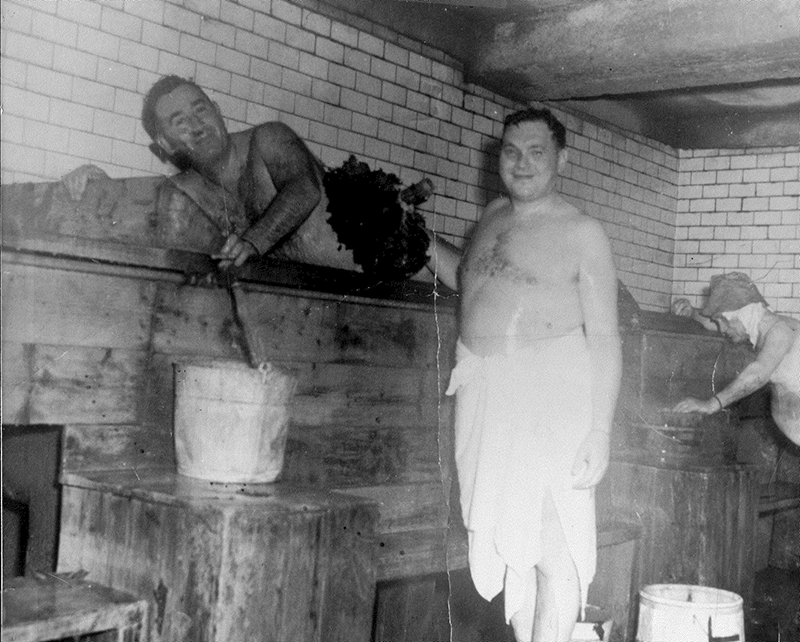
Ask a Detroiter of a certain age whether they’ve heard of the Oakland Health Club, and there’s a good chance its mention will conjure up sordid images of swingers’ nights, Jewish mobsters, and maybe saunas. Those images aren’t unfounded, but they tell only a fraction of the story behind the bathhouse, now called The Schvitz. Owner Paddy Lynch is determined to put the full picture on display.
In 1930, the Meltzer family founded the Oakland Health Club as a men’s-only Jewish community center on Oakland Avenue in Detroit’s North End. For Russian Jews like the Meltzers, the banya, or steam bath, was a sacred tradition. Not only was it a relaxing environment, but it gave guests a place to purify themselves in preparation for Shabbat.
Despite the club’s wholesome roots, members of Detroit’s infamous Prohibition-era Purple Gang were common figures there. Harry “Chinky” Meltzer, a cousin of one of the original owners, was a known associate of the Purple Gang — and its reputed explosives expert. Lynch is quick to point out that while gang members may have frequented the bathhouse, people from all walks of life took part in the ritualistic steam.
“People think The Schvitz was [the Purple Gang’s] clubhouse,” Lynch says. “It was open to people of all kinds. There was a mutual understanding that there might be a judge and a cop over there and two well-known gangsters over there, but they’re all here to steam.”
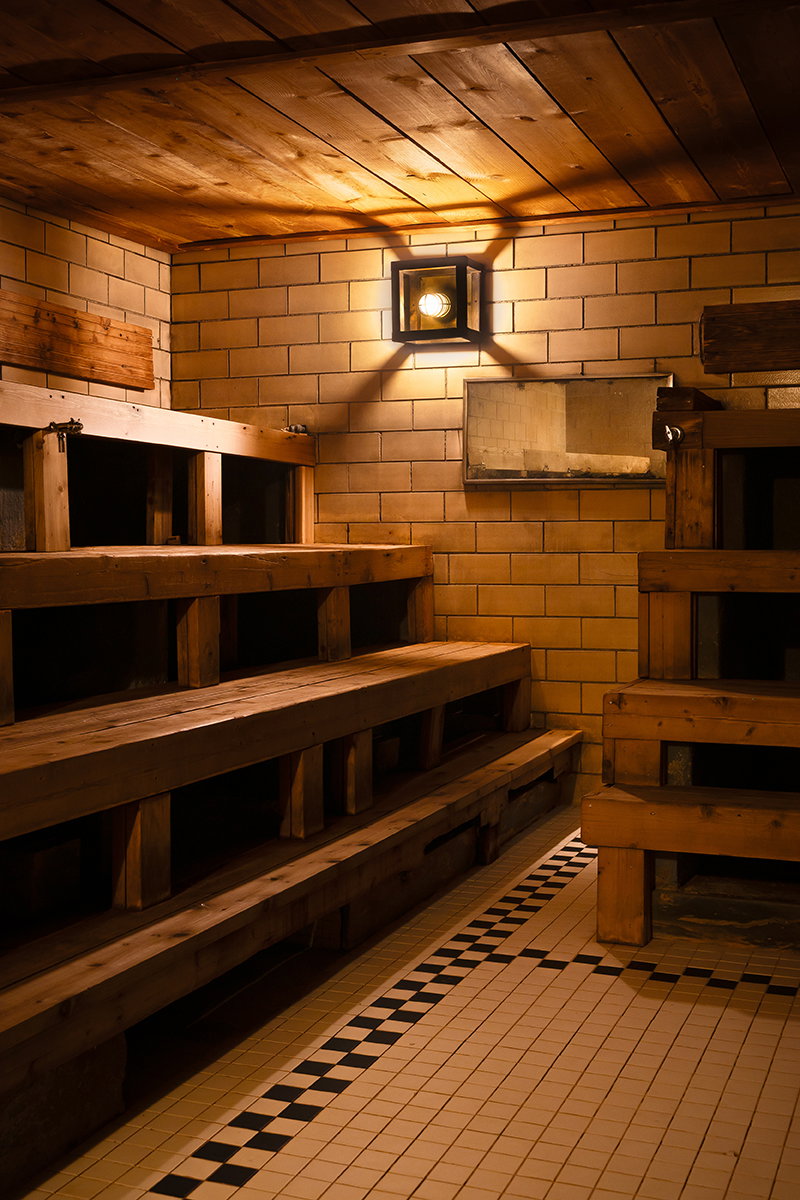
The Meltzers owned the club until 1977, long after the Purple Gang’s dissolution. When ownership changed hands, the first floor’s interior underwent a $500,000 overhaul. However, the lifeblood of the Oakland Health Club remained the same: Eugene “Toots” Johnson.
Hired by the Meltzers in 1928, Johnson’s first job at the club was to hand-dig the downstairs pool. His handiwork is still in use today, with black inlaid tile denoting the pool’s 1930 completion. Johnson lived upstairs and served as the Oakland Health Club’s de facto manager and chef for nearly 50 years, until his death in 1987.
Lynch bought the building in 2017, determined to honor the spirit that Johnson and others had spent decades instilling into the club. He admits that in the beginning, he had to win over some of the old-timers who feared losing the place they treasured.
“I think they realized pretty quickly that I was sort of a preservationist, and I didn’t want to disturb what I loved about the place,” Lynch says. “You don’t need to change things radically to make improvements, and you don’t need to take things away in order to add things.”
A few add-ons had overstayed their welcome, however, and the carpeting was the first to go. Lynch generally prefers addition over subtraction “but not when it comes to carpet,” he says.
With the carpet gone, signs of The Schvitz’s past lives began to show. Renovations exposed ornate stained-glass windows in the smoking room and gave the original black and white floor tiles a second life. The restoration process revealed many of The Schvitz’s multitudes, but the biggest surprise was a mikveh, discovered under the floorboards of a room once used for the club’s notorious swinger parties.
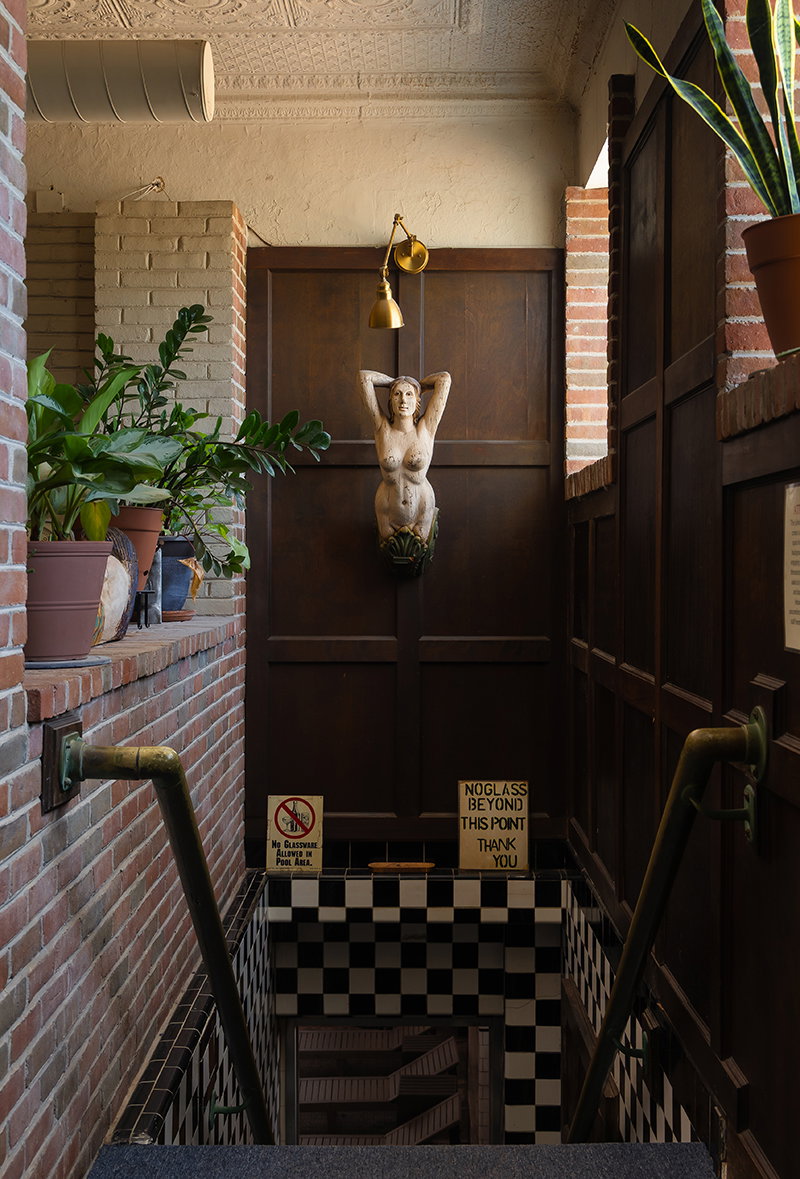
To the untrained eye, the mikveh looks unassuming, but the tiled bath stands as a crucial relic of the North End’s historic Jewish community. It’s believed to be the only intact mikveh in Detroit, although it is no longer used for traditional purification rituals. These days it remains unused in what is now the women’s locker room. Talks have taken place regarding the mikveh’s modern-day use, but as of right now, Lynch prefers to leave it on display.
“I treat it almost like a religious relic,” Lynch says. “I’m not going to cover it again or turn it into a hot tub. It’s surrounded by art and plants. It’s beautiful in its own way.”
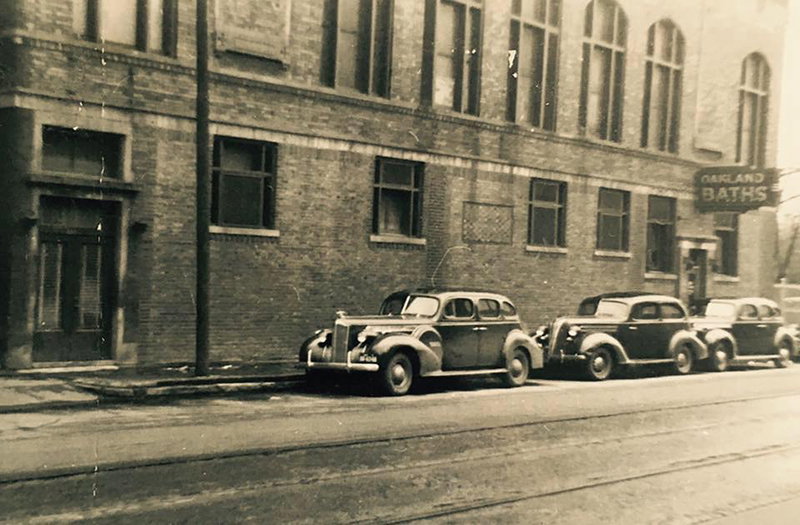
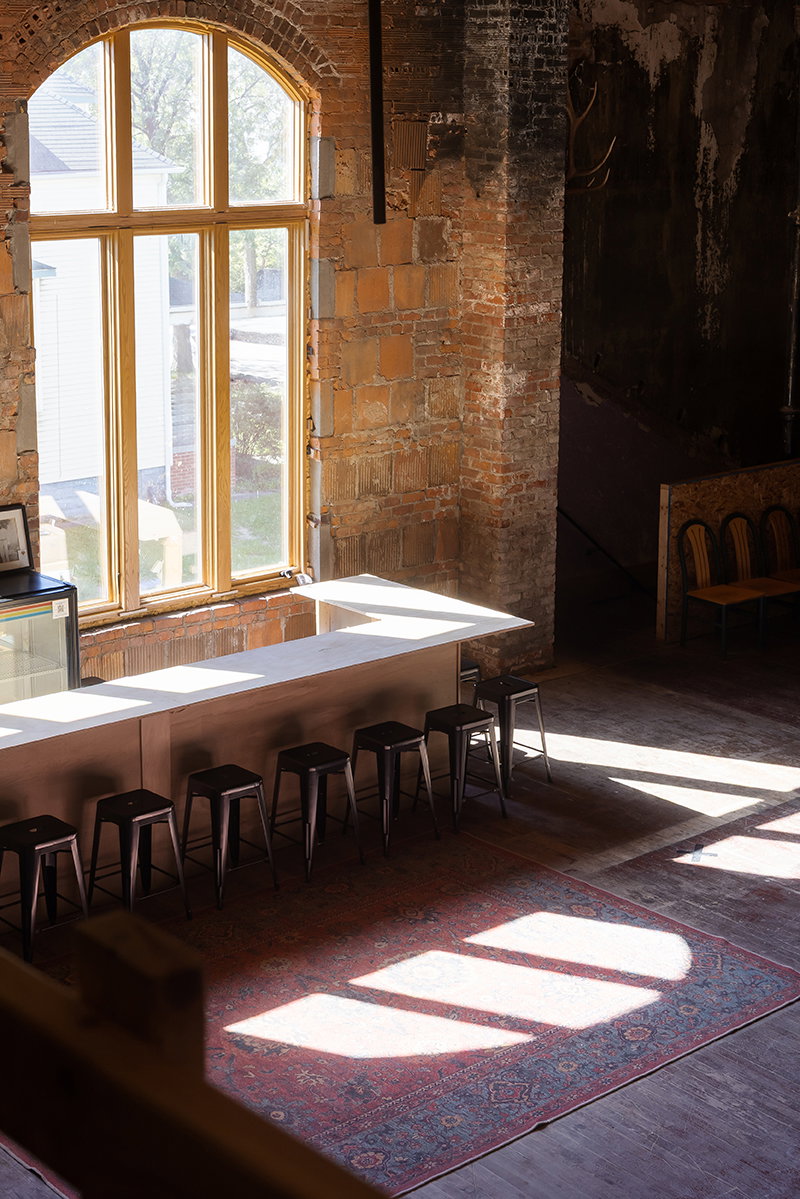
Upstairs, another surprise came in the form of a massive, 4,000-square-foot ballroom. Like most rooms at The Schvitz, it served more than one purpose. A portion of it once housed Johnson, the club’s longtime manager, while another section held 50 phones that bookies would use to take bets. Before that, it functioned as a community space where families celebrated bar and bat mitzvahs, high holidays, and weddings.
In 2019, Lynch received a $40,000 grant from Motor City Match, a Detroit nonprofit, to help restore the ballroom. Lynch said this initial investment kickstarted the project and allowed the crew to focus on much-needed repairs, like fixing the crumbling roof and rebuilding the stage and bathrooms. Almost six years later, the ballroom is open, once again taking on its role as a communal space.
These days, places like The Schvitz have become increasingly rare. Often, when buildings get old, they’re simply destroyed and replaced with something new. Lynch has proved that doesn’t have to be the case. Sometimes, bringing a place back to its roots and preserving its history is the best kind of development.
“I feel like if you go backwards and you go deep enough, you find fertile soil,” Lynch says.
This story originally appeared in the November 2026 issue of Hour Detroit magazine. To read more, pick up a copy of Hour Detroit at a local retail outlet. Click here to get our digital edition.
|
|
|
|
|
|