On the 23rd floor of the Royal Mansour Casablanca, floor-to-ceiling windows frame an iconic Moroccan scene: Painterly streaks of rose and saffron animate the sky behind the monumental Hassan II Mosque, accentuating its gravitas as one of the North African nation’s most emblematic structures. At its feet sprawls a sea of whitewashed buildings that give the city its name — and its mystique.
Casablanca — Casa to locals — has a romantic, almost mythical connotation thanks to the eponymous film, and seeing it from this vantage point encourages that perception. Indeed, the city is notoriously hard to know, and navigating its historic medina, monuments, and multifaceted architectural gems takes some guidance from a Casablancan. That’s where the Royal Mansour shines.
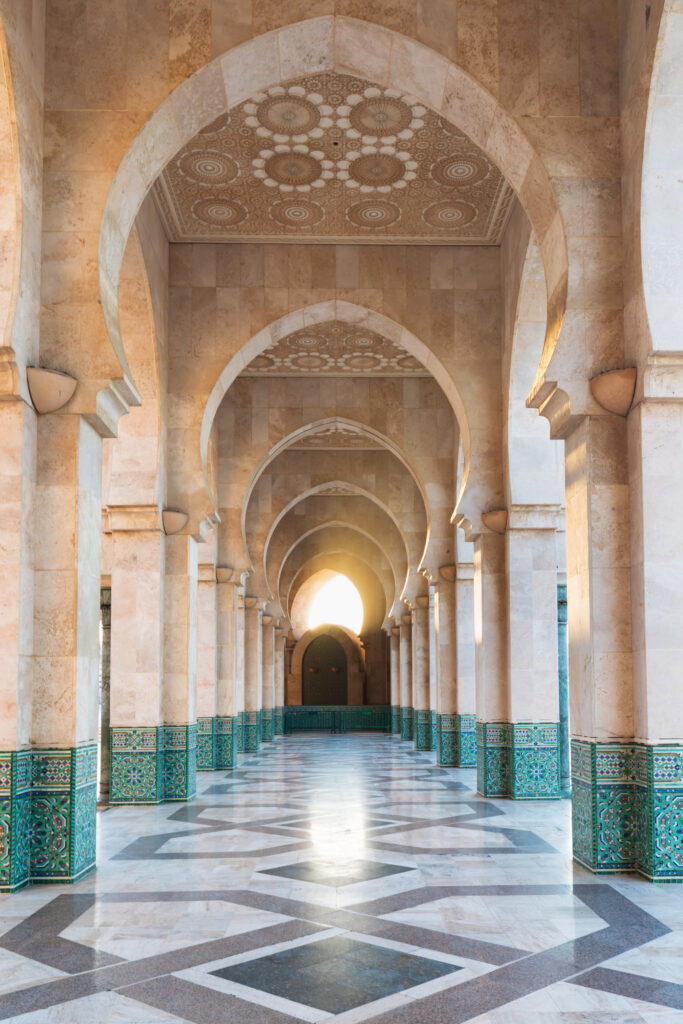
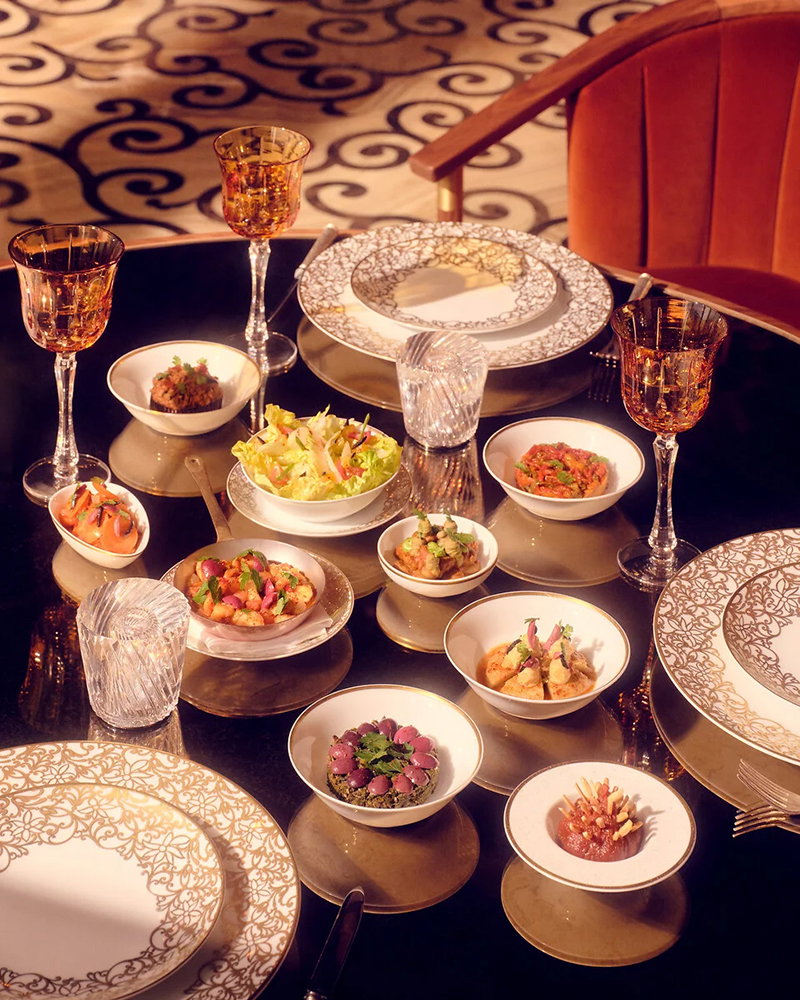
Whether you want to dive into the old medina for traditional craft shopping, experience Moroccan food the authentic way, or explore the city’s edgy street art, there’s an expert for that. The hotel’s guides, hand-picked for their depth of knowledge and bright personalities, bring the city to life with access and storytelling. Experiences might include a behind-the-scenes tour of the Hassan II Mosque for an interpretive look at the innovative Islamic architecture, visits to the studios of creators whose work you won’t see at the markets, or flying lessons above the White City.
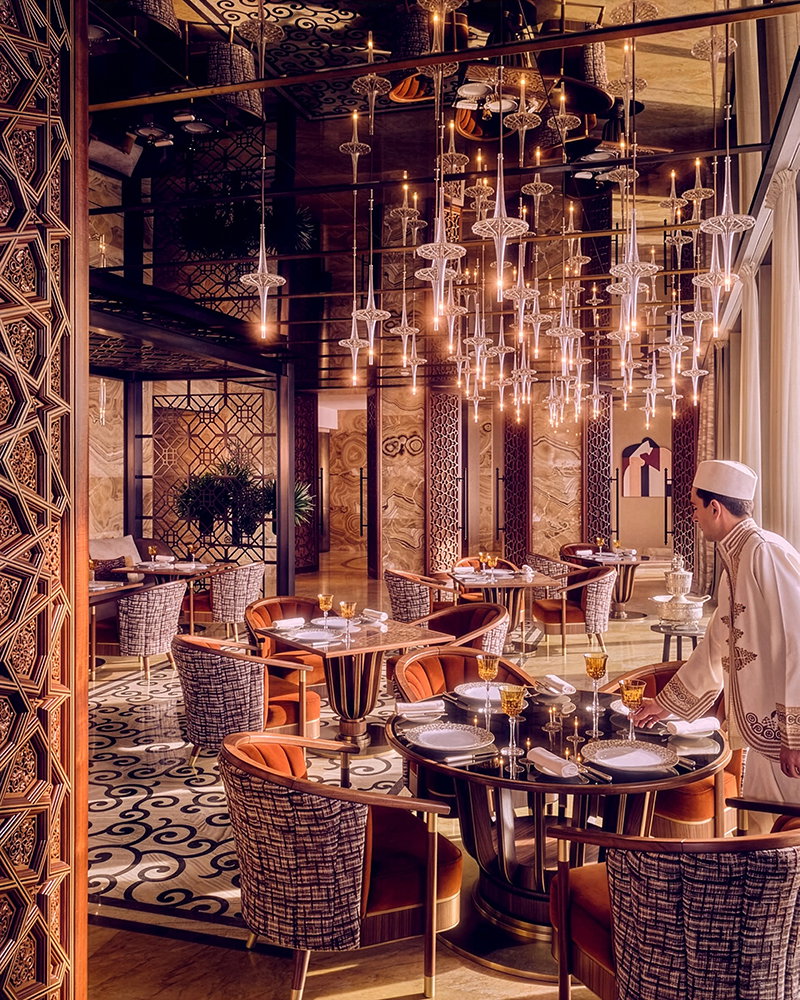
A brilliant reconstruction of a 1950s Art Deco palace, the 149-key Royal Mansour is a masterpiece of modern Moroccan design and a beacon of luxury in Casa.
Every square inch gleams with exotic marbles, brass, crystal chandeliers, and inlaid woods, all crafted by elite artisans who worked on the project over eight years. Their labor of love is evident from the moment you enter the lobby and see an installation of 600 crystal fish suspended by thousands of fiberglass rods and illuminated by 149 fireflies — truly an awe-inspiring moment.
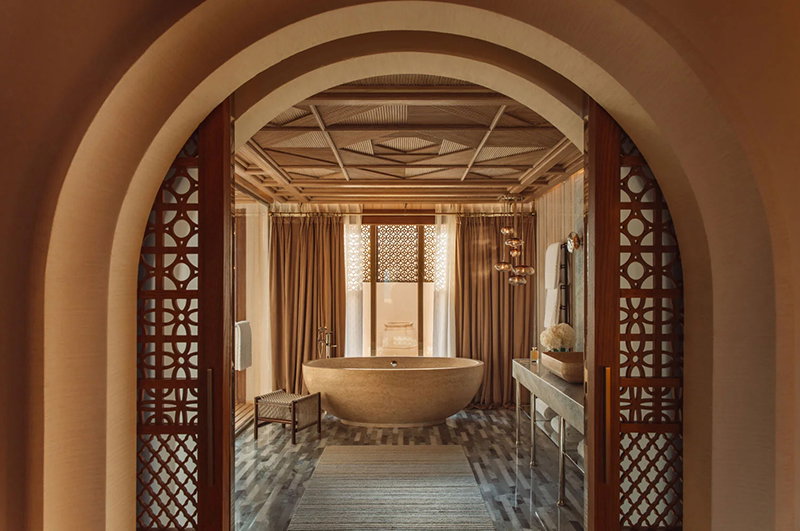
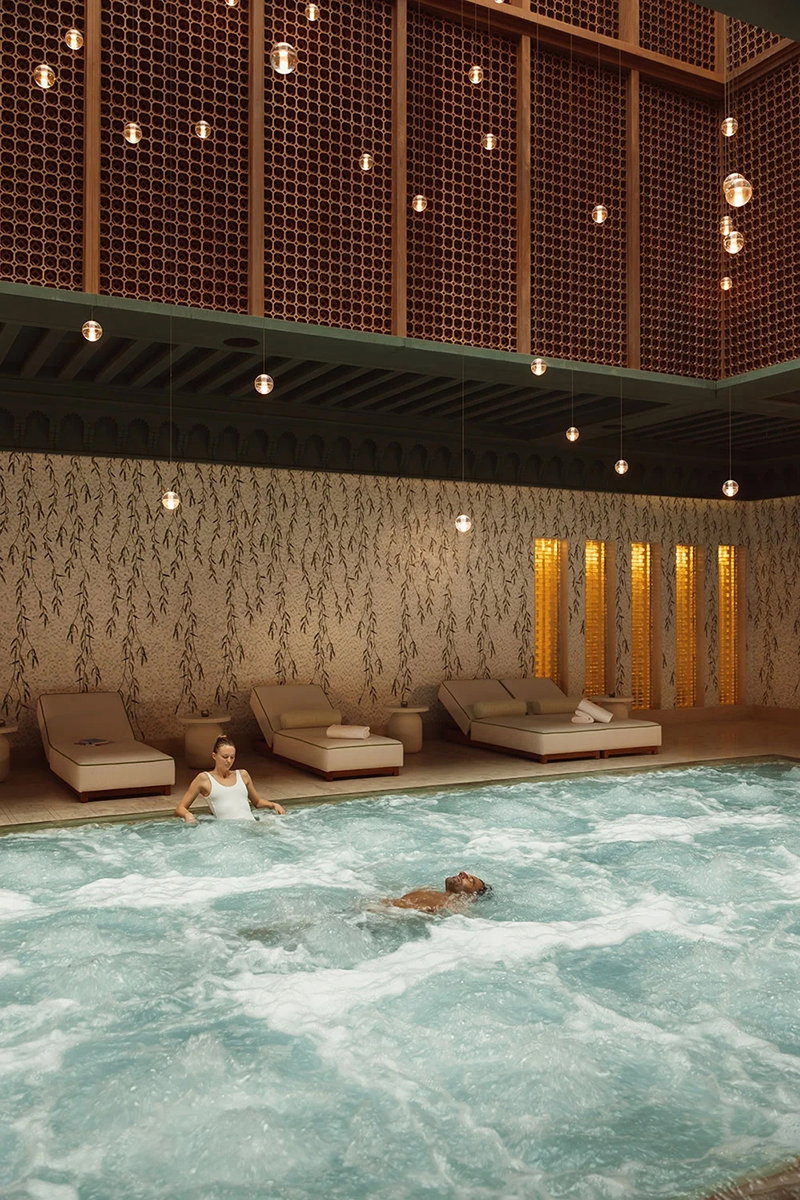
This modern palace, which opened in 2024, exceeds expectations in every way. The rooms and suites are richly paneled in wood, so you never have to see a wall. Marble bathrooms have underfloor heating. Textiles are of the same luxury grade as those found in the finest homes. The larger suites offer features like enormous footprints, a private sky garden, and a personal hammam. Not even the smallest detail has been overlooked.
The service is equally exceptional. Royal Mansour maintains an academy for the training of its staff, teaching the art of hospitality and unintrusive service, as well as international etiquette. In a world that moves quickly, where much is abandoned in the pursuit of profit, it is a pleasure to be in a place that prizes the good manners and rituals that elevate the guest experience.
On the heels of the Casablanca opening, Royal Mansour unveiled another gem in Tamuda Bay outside of Tangier. Known as the Moroccan Riviera, Tamuda Bay is where the royal summer palace is located — not far from the Royal Mansour, in fact.
In contrast to Casa’s urban energy, Tamuda is all about quiet glamour and simple cubist architecture that reflects the colors of sea and sky. The focus here is on nature: the glittering waters, the majestic date palms, the blazing sunsets.
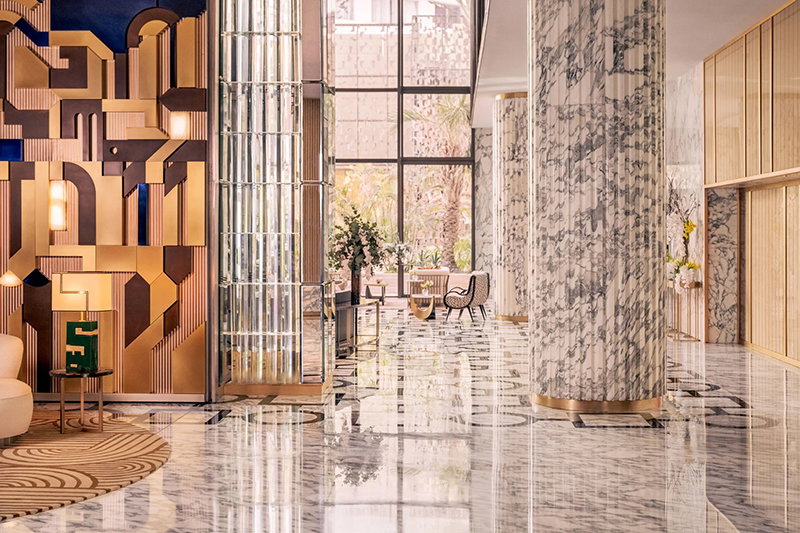
The Royal Mansour Tamuda Bay occupies a stretch of prime waterfront facing the Alboran Sea, the body of water between Morocco and Spain. Materials from this area — including 95,000 seashells, mother-of-pearl, and even upcycled plastic bottles removed from the sea — give the property a true sense of place.
The beauty of this resort is in the zen-like calm it inspires. Rooms and suites have views of the sea and gardens, as well as balconies from which to take it all in. Traditional Moroccan materials like zellige tiles, marble, pottery, and inlaid wood are all present here, but in a more contemporary style and muted colorways.
The resort’s most extravagant offering, the Royal Villa, is a showcase of Moroccan craftsmanship. With its intricate parquet floors, shell-encrusted walls, moucharabieh doors and windows, and inlaid ceilings, this space could easily be a seaside palace.
From Tamuda Bay, there are excursions in every direction, but the two musts are Chefchaouen and Tétouan. Chefchaouen, also known as the Blue City, is like stepping into a pool lined with tiles in every shade of blue. Immersed in the hue of its medina, you’ll discover remarkable Andalusian architecture, complete with citrus-dotted courtyards and shaded alleyways leading deeper into the labyrinth of the old city. Don’t miss the caravanserai (an old inn for traveling merchants), the elaborate fountains scattered throughout, and the old kasbah (a 15th-century citadel).
Tétouan, a UNESCO World Heritage Site, is one of Morocco’s great cities dating to the third century B.C. In more recent years, Tétouan was rebuilt by Andalusian Muslim and Jewish refugees, and today it is a bastion of Andalusian architecture. Its medina is one of Morocco’s most traditional, with narrow passages and steps connecting public buildings like mosques and hammams. The modest storefronts are full of treasures, most notably leather goods, embroidered fabrics, musical instruments, and Hispano-Moorish art.
Both of the newest Royal Mansour properties are strongholds of Moroccan authenticity, but they are best experienced together for an unforgettable immersion into an exotic destination that, layer by layer, becomes familiar. royalmansour.com
This story originally appeared in the November 2026 issue of Hour Detroit magazine. To read more, pick up a copy of Hour Detroit at a local retail outlet. Click here to get our digital edition.
|
|
|
|
|
|