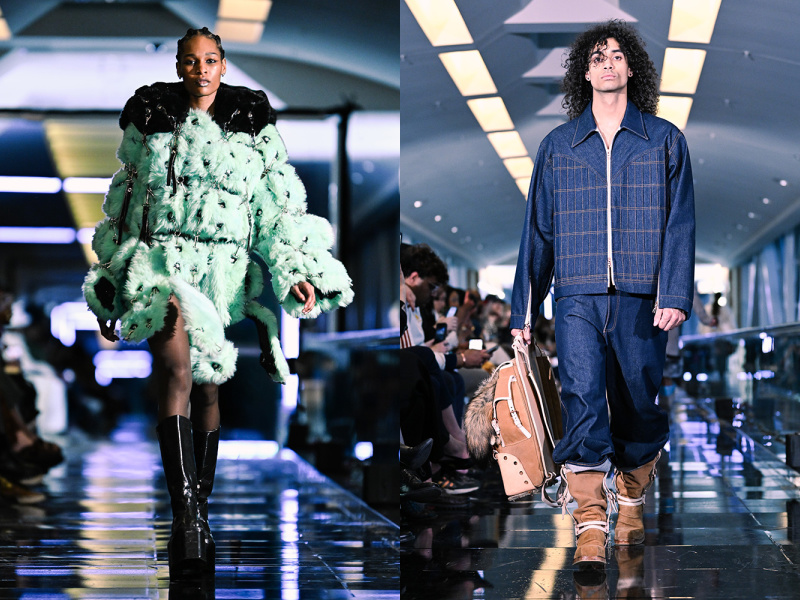
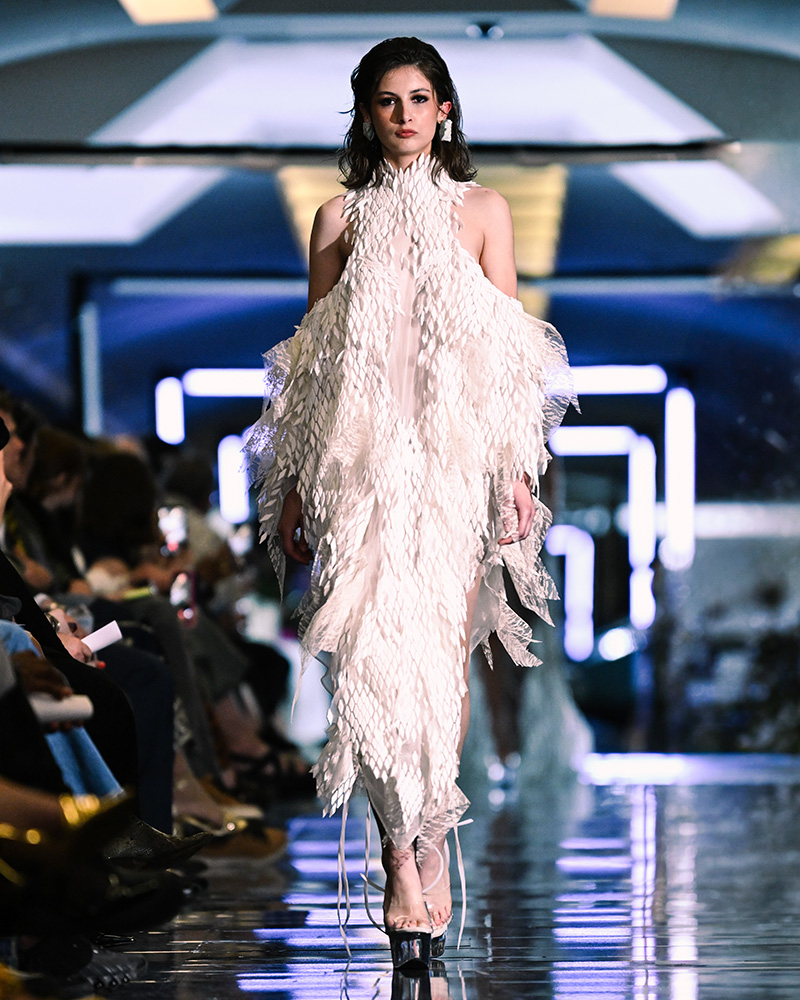
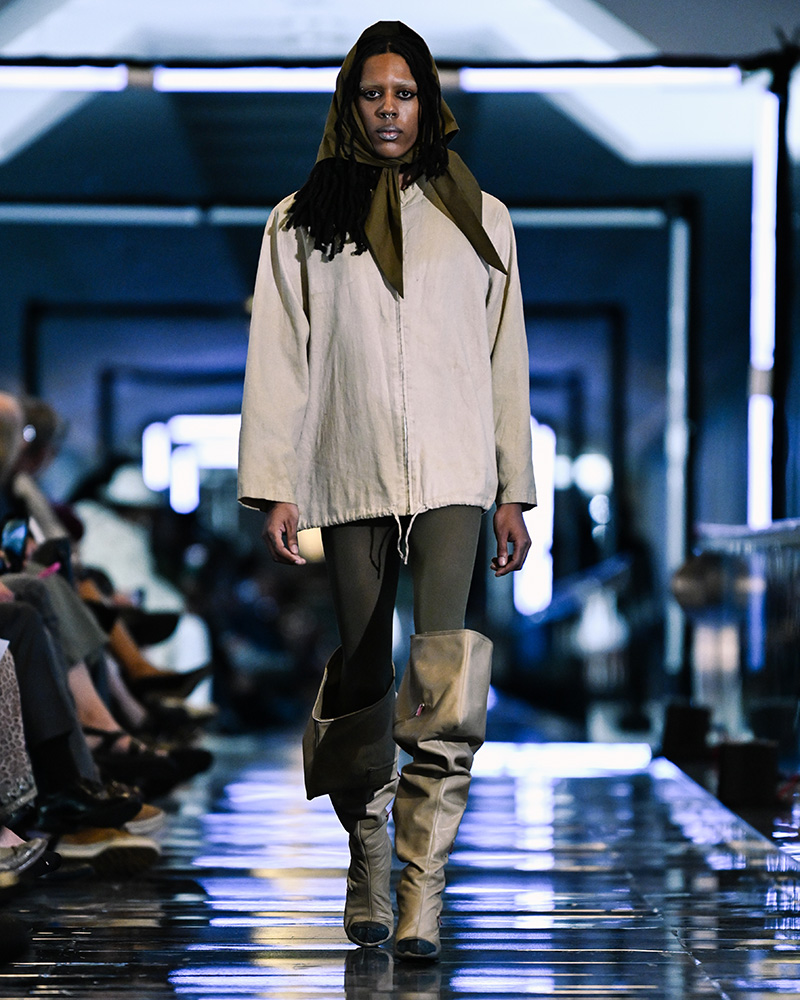
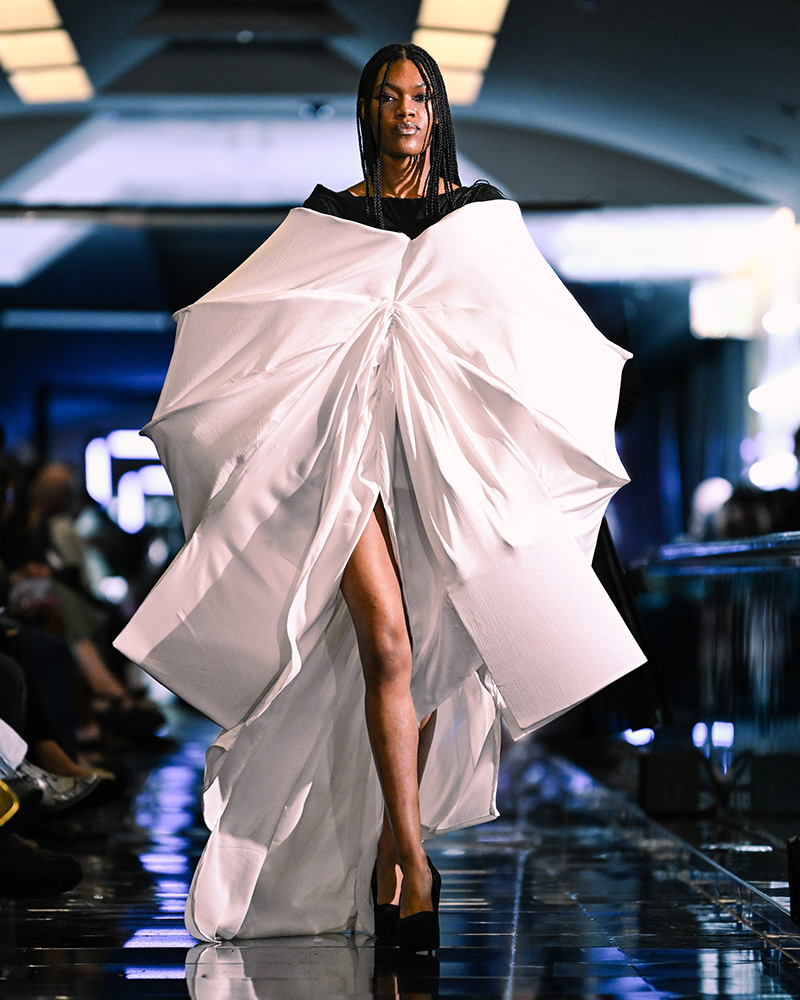
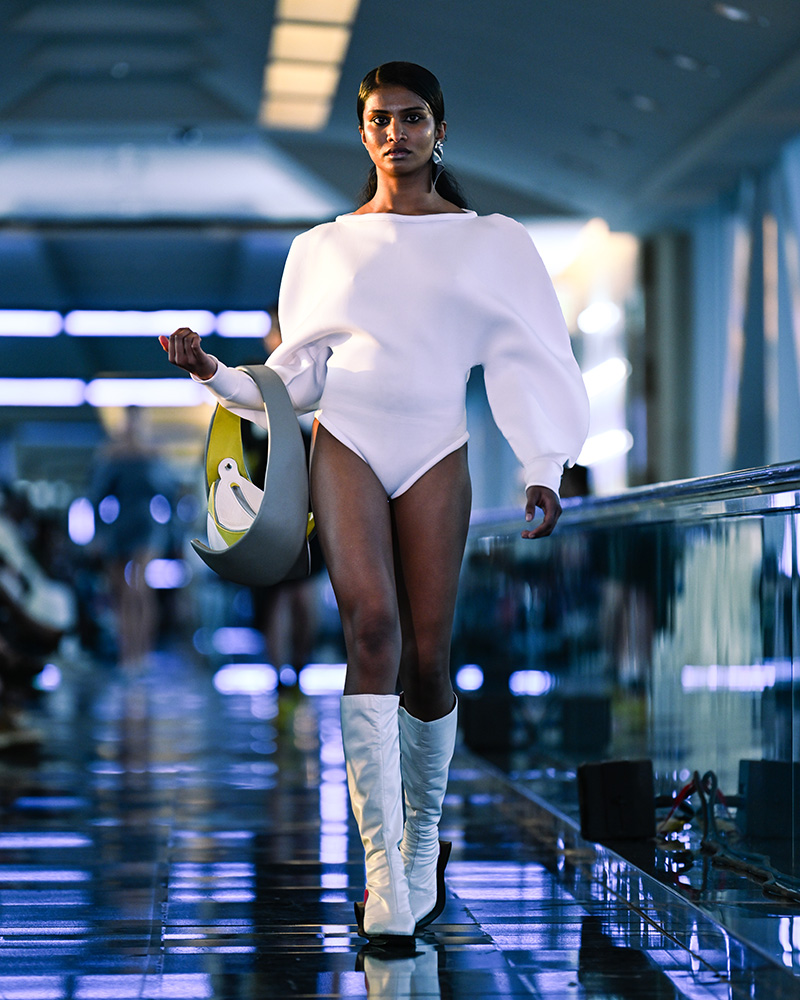
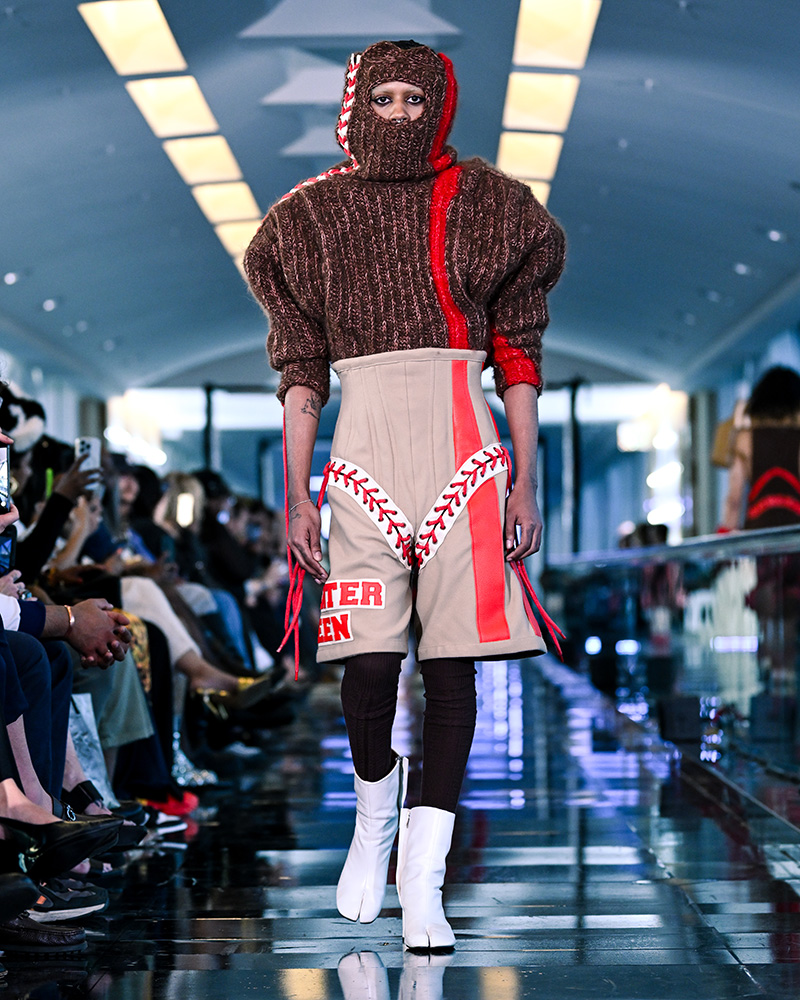
Suspended frames, projected light, and a 700-foot runway transformed the Skywalk at Somerset Collection on April 26 as the College for Creative Studies presented The Show 2026, its annual student fashion showcase.
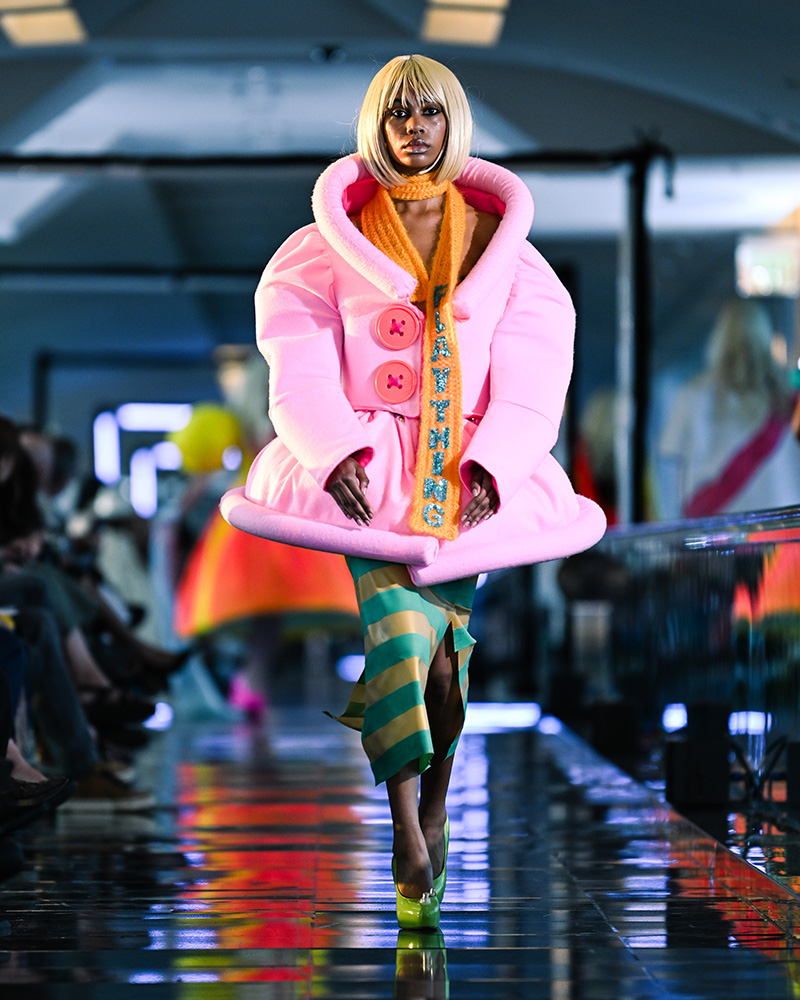
The event drew 354 guests for an evening featuring over 100 looks from 19 student designers across apparel and accessories. A VIP reception preceded the 8 p.m. runway presentation, turning the glass-enclosed bridge into an immersive, cinematic environment.
Inspired by Stanley Kubrick’s 2001: A Space Odyssey, the show emphasized precision, minimalism, and transformation. Metallic surfaces reflected and diffused light as models moved through a space defined as much by structure as by garment. Developed with CCS’s Interior Design department, the runway functioned as a spatial installation: part stage, part system.
For Aki Choklat, the Linda Dresner Endowed Chair in Fashion Design at CCS, the night carries weight beyond the spectacle.
“This is our industry day… people think it’s just a fashion show, but for us it’s not,” he said.
At CCS, collections of Fashion Design majors are built over a year of intensive studio work, pushing students to translate ideas into fully realized products.
“There’s so much that the student has to consider: wearability, durability, time management, communication,” Choklat said. “If you can do this, you can kind of do anything.”
And the stakes are clear.
“The future of fashion is on the shoulders of my students,” he said. “It’s not me, it’s them.
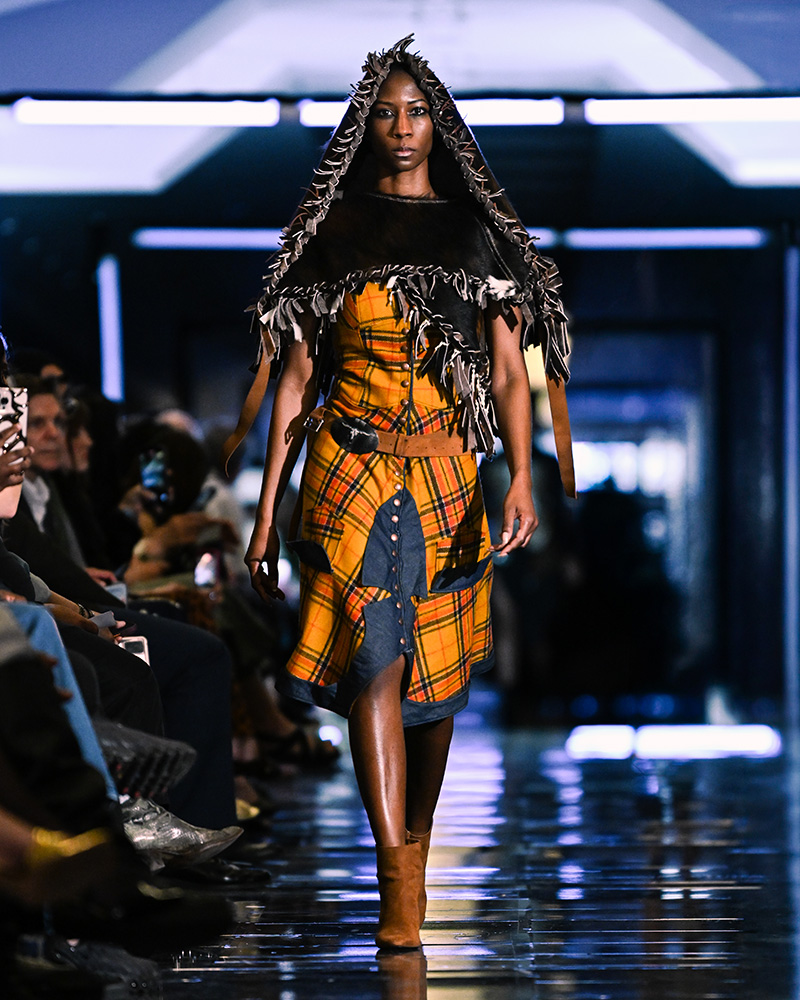
Designing From Something Real
Each collection in this year’s show was rooted in narrative rather than abstraction. Designers drew from Iraqi immigrant history along Detroit’s Seven Mile corridor, the city’s automotive legacy, and the origins of techno, translating those references through both traditional craftsmanship and advanced techniques like 3D printing and laser cutting.
“We forbid students to really get inspired by other designers,” Choklat said. “We want them to find their own DNA, their own handwriting.”
That philosophy pushes designers toward deeply personal work.
For senior designer Veronica Wardowski, Detroit itself became the foundation, merging industrial history with techno culture through modular construction and architectural references.
Across the runway, that sense of storytelling held. Senior designer Hayden Brice combined London canal boat culture with Northern Michigan landscapes, while Izzy Abohasira reimagined Western mythology through a narrative centered on female autonomy.
Junior designer Bryce Truby developed a collection inspired by a Grand Canyon camping trip, focusing on natural decay and material transformation. Using acid-washed leather, charred wood, and animal motifs, the work took an estimated 1,500 to 2,000 hours to complete over the academic year.

What the Industry Is Watching For
Beyond the runway, the show functions as a direct pipeline to the fashion industry, with an international jury reviewing work both on the rack and in motion.
“What makes me feel curious about their collection?” said Danialle Karmanos, who is on the CCS Board of Trustees and is a long-time supporter of the Fashion Design program. “Narrative adds so many layers of depth to their work… that’s what makes me fall in love with it.”
That sense of curiosity, of wanting to know more, emerges as a defining measure of success for the student and their work.
“The depth of talent they’ve cultivated is jaw dropping,” Karmanos said. “They’re light years ahead of anybody else coming out of fashion school.”
For Silvia Prada, Senior Concept Partner at Kate Spade, the strongest work is unified.
“If everything is the same, everything is going to look the same,” she said. “You can only bring something new if you’re connected to culture.”
“I will put this work up against student work from any university,” added Ben Ewy, Vice President Global Product Design, Research and Development at Carhartt.
Ewy emphasized the role of storytelling in what resonates beyond the runway.
“Stories give product soul,” he said. “That’s the product I want to buy. That’s the student I want to hire.”
Ewy added, “They come out of here ready to work. They understand how to apply creativity.”
Detroit as Framework
At the center of it all is Detroit, not just as inspiration, but as structure.
“Detroit has a special air… there’s a renaissance coming,” said Rey Pador, CCS Associate Professor, who oversees the Apparel Design curriculum.
From automotive production to techno, from architecture to labor, the city’s legacy shapes how designers think about both creativity and making. At CCS, fashion is treated as something built, tested through process, refined through critique, and realized through craft. And if the night made anything clear, it’s this: The future of fashion isn’t coming.
It’s already here.
To learn more about CCS’s Fashion Design program, visit ccsdetroit.edu.



|
|
|
|
|
|