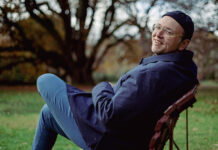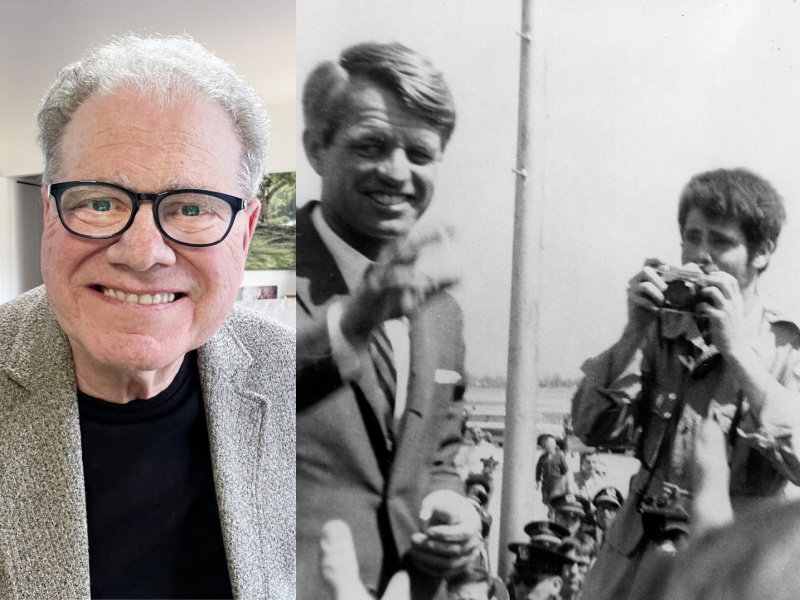
Douglas Elbinger isn’t afraid to be controversial. Proof of that can be found in “Heroes of the Revolution,” his career retrospective exhibition opening on Sept. 19 at Color Ink Studio in Hazel Park.
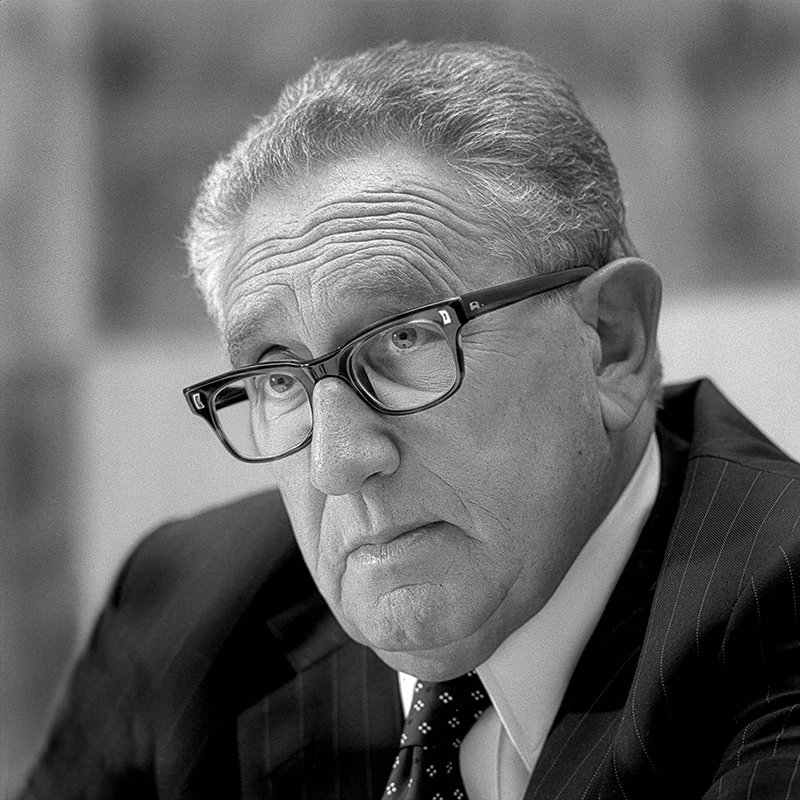
The exhibition features photos over multiple decades of some of the most impactful figures in modern history. These figures are beloved by some yet reviled by others. For this exhibition, Elbinger managed to pare down his staggering library of photographs to just 25 subjects, which include Dan Gilbert, Bill and Hillary Clinton, Henry Kissinger, Maya Angelo, and Colin Powell.
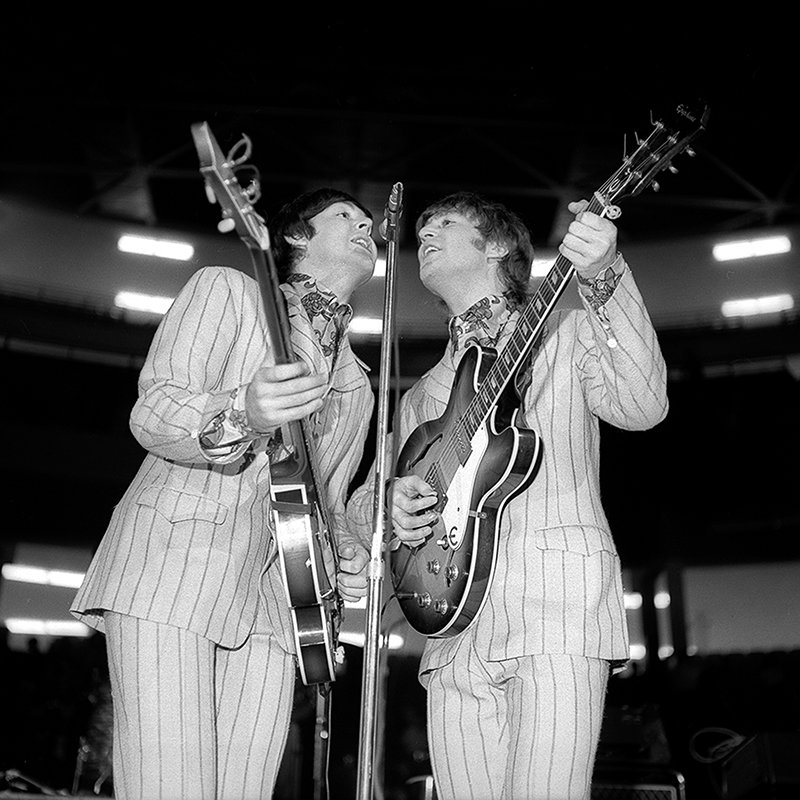
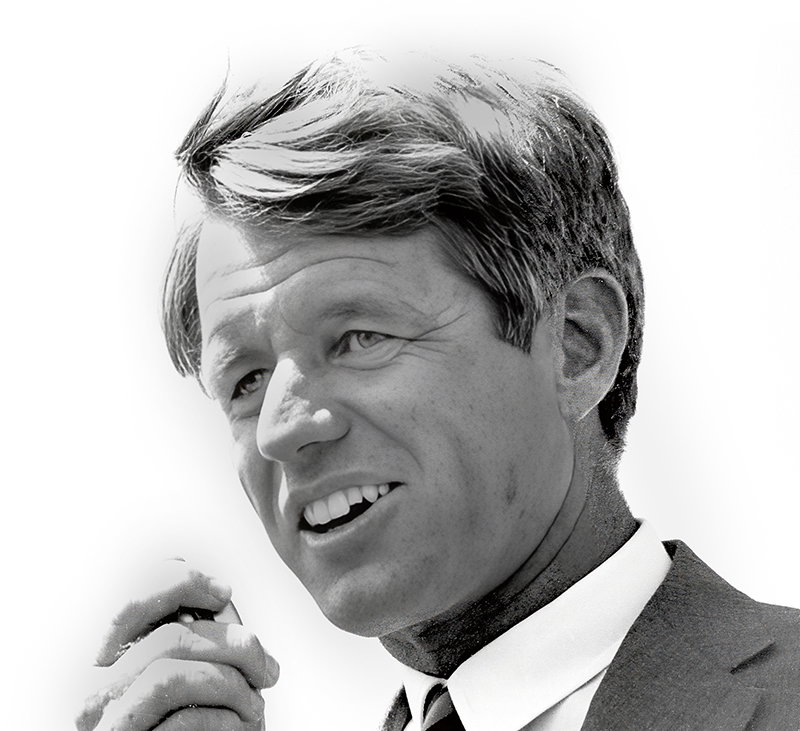
Elbinger’s selections also include John Lennon and Paul McCartney performing at the Olympia in 1966 and Robert F. Kennedy during his 1968 presidential campaign stops in Michigan. During these two events, Elbinger was 15 and 17 years old, respectively, and worked as a stringer photographer for the Detroit Free Press. He landed that gig after winning a National Scholastic photography award, which was presented to him by Tony Spina, legendary chief photographer for the Free Press. Spina took Elbinger under his wing and invited him to go on assignments with him.
The rest, as they say, is history, and fortunately for us all, Elbinger was there to photograph it.
(The following interview has been edited for clarity and length.)
Right away, I couldn’t help but notice the variety of individuals in this exhibition, from Kissinger, to the Clintons, to Jane Fonda. With that in mind, how do you plan on addressing criticism towards the individuals you picked for this exhibition?
I expect criticism; I like to spark a little controversy. You know, love or hate Kissinger, he was an important person. During his time, he was a very pivotal, influential person. …I’m hoping for controversy; I want to spark some discussion.
What I remember of [photographing] Kissinger was his plane was late. He attended a dinner, gave a speech, and posed for pictures. Everybody left, and his plane was late. So, he ordered a bottle of wine. I sat there with him, and we told jokes.
Did he have some good ones?
Oh, sh-t, yeah! He was funny! I was sitting there in the bar at the Kellogg Center with Henry Kissinger for two hours, and we killed a couple bottles of wine. He could barely hold on to the chair when he got up.
You started your career in high school and began working with Tony Spina. Talk to me about first crossing paths and working with him.
I was a junior in high school, and I won a National Scholastic photography award. I had to go downtown to the Free Press building, and they were gonna take my picture. I had an interest in journalism, and Tony presented the award. We talked, and he invited me to go on assignments with him and hang out at the Free Press. I’d take the bus downtown after school, go to the Free Press, use their darkroom, develop film for the photographers, make prints, and learn the ropes.
… I realized being a photographer will take you places, and then, I realized if I put two Nikon’s around my neck and had my press pass from the Free Press, I could walk in anywhere in Detroit back in those days. I could go backstage at any concert, any sporting event. Not many people carried cameras in those days.
Is that how you got to photograph the Beatles?
Yeah, exactly! I knew from working at the Free Press and going to some hockey games [at the Olympia] that there was a press parking area, and there was a press gate. I was 15 and had a learner’s permit. I asked my mother if I could borrow the car. Thankfully, she didn’t ask me where I was going. I had never driven downtown before. I was using a map!
…I drove towards the police barrier, and I had a little letter from Tony Spina saying I was with the Free Press. The officer didn’t even read it; he just pointed and said, “Go into this parking area.” Then, I slung my camera bag over my shoulder and went to the press gate. I got backstage, and I quickly saw there were a sea of photographers in the front of the stage. I knew that there was no way I was going to elbow my way through that crowd and get up close. By the side of the stage, nobody was there. I went to the side of the stage, and the Beatles walked right past me. Mal Evans, who was their road manager, was standing there, and he nodded to me to follow them. So, I went right behind Ringo, got on stage, the lights went on, and that’s how I got those pictures.
From going through security at some of the events I’ve covered, I’m just floored by the lack of security!
There was no security compared to today! Now, the tightest security I’ve ever seen is the Rolling Stones [in 1994 when they played Spartan Stadium in East Lansing]. I’ve been on Air Force One, I’ve traveled with the Pope, and I’ve been with astronauts. I have experienced all kinds of security, but nothing like the Rolling Stones.
…I get to the press gate, and there’s hundreds of people in front, and I knew they weren’t getting in. I didn’t even know if I was getting in! A lady comes out, and says in an English accent, “If your name is on this list, follow me.” There were only three names on the list, and my name was first.
…They took us through the corridors, and we went to a room and had to sign a disclaimer. I couldn’t read it; it was all in very small legal type on several pages. They said, “You’re going to have an escort,” and he took me to the stage before the concert started. We went on the stage while they were still setting up the lights, and he said, “See this big taped X in red? You stay right there. Do not move. The Stones know you’re there.” And sure enough, during the concert, each one of them came right up to me and stuck their face in my camera.
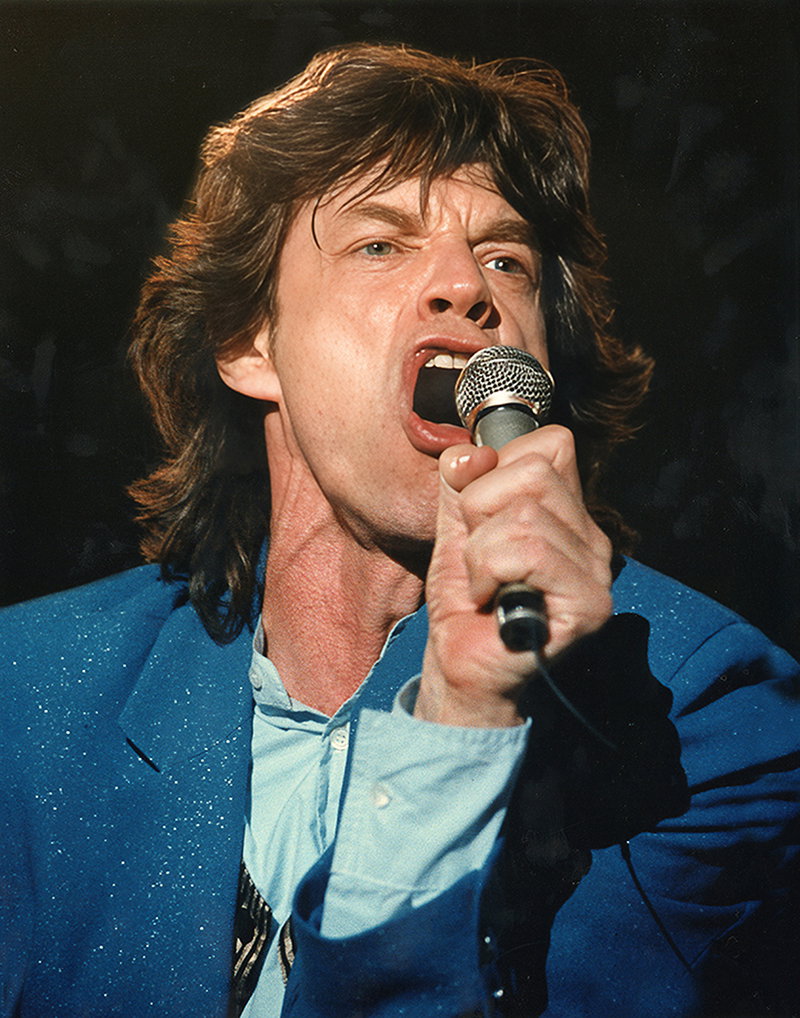
I just love the fact that in a pre-9/11 world, the Rolling Stones in the ’90s had tighter security than Air Force One!
Speaking of Air Force One, I’d be remise if I didn’t ask about when you photographed Robert F. Kennedy during his 1965 presidential campaign. Talk to me about your experience there.
When I was a stringer for the Free Press, I was told that if I go to Ann Arbor at a certain time, [RFK’s] doing a rally there, and then I can get on the campaign plane and go to Lansing and Grand Rapids. It was all in an afternoon. …I’m just standing up next to him [on stage]. Absolutely no security. None! This was just a couple of weeks before he was assassinated.
Considering his brother was assassinated, there was really no security? You saw no one?
I know [how] to recognize it. I have my antenna up for even plain-clothes security, and there wasn’t any there. There might have been an assistant or somebody in the crowd, but there was nobody scanning the crowd for troublemakers. At that time, people weren’t carrying guns all the time; it was a different world.
With all of this in mind, what’s the main takeaway you want people to come away with from your exhibition?
A lot of these are historical pictures. Maybe giving somebody a sense of history and change, and that in many cases, average people picked up a guitar or did something and made an impression. Part of it, I think, is just that you’re able to be a hero in your own way, no matter what you do. We’re all heroes, and we’re all in constant change.
Heroes of the Revolution runs from Sept. 19-Oct. 30. An opening reception is taking place from 3-6 p.m. on Sept. 19. A special “Show & Tell” event featuring Elbinger discussing his exhibition is taking place on Oct. 1 from 7-8:30 p.m. For complete details, visit colorinkstudio.com.
|
|
|
|
|
|