What’s spookier: Eloise Asylum’s eerie past or the aliens in its basement?
The ominous facade of the formerly abandoned psychiatric institution towers over Michigan Avenue in Westland. On the grounds, the adjacent power plant looks like a horror movie set, shattered glass windows and all. Add costumed performers — from a chainsaw-wielding clown to a man on stilts donning a gas mask and bearing a hatchet — and you’ll get chills before even entering the Hollywood-quality haunt.
Inside, a whirlwind of fog and thunder ushers you into the bygone days of Eloise’s psychiatric ward. Slow down to appreciate the props, including realistic hospital beds sourced from TV show sets and an exact replica of Eloise’s old X-ray machine.
“Patients” wander the halls, faces and costumes splattered in blood. They crawl through dingy bunk beds, pop out from hidden crevices, and follow you through dense fog, remaining mere shadows until their faces loom inches from yours.
The relief of escaping the first-floor asylum lasts only a second. In the basement, an experiment gone wrong gives way to a sci-fi adventure. The animatronics rival a theme park’s — likely because Universal Studios team members helped create them, according to operating manager Mike Smith. If you’re anything like the Hour Detroit crew, screams will fly as monsters lunge from the dark.
As spooky as the haunts may be, the building’s real history proves just as unsettling.
From Historic Site to Premier Haunt
By the time the defunct psychiatric institution sold in 2018, it had acquired all the ingredients of a haunted locale: abandoned buildings, a questionable past, and thousands of former patients buried nearby.
Eloise opened in 1839 as the Wayne County Poor House in what was once Nankin Township. After first serving the impoverished of Wayne County, it admitted its first mental patient in 1841. By the late 1920s, the facility had grown from 35 patients to about 10,000 residents, supported by 2,000 staff.
Over time, Eloise developed into a self-contained city, with 75 buildings across 902 acres. Alongside its medical and psychiatric facilities, the complex included a farm, railroad, post office, cookhouse, greenhouse, bakery, and slaughterhouse, as well as its own police and fire departments.
The hospital program was a leader in medical innovation. It was among the first to use X-ray technology for diagnosis and housed Michigan’s first kidney dialysis unit. Its tuberculosis sanitorium pioneered “open air” treatment. And its mental health facility was an early adopter of treatments ranging from music and television therapies to lobotomies and electroshock therapy — once considered groundbreaking rather than barbaric.
Even so, allegations of mistreatment earned the building a horrific reputation. A Detroit Free Press archive notes that as early as the 1840s, patients were kept “in a barn, upstairs from where the pigs were kept.” By the 1940s, Eloise’s population began to dwindle, with “reports of violence, questionable conditions, misconduct, and overall neglect” creating wariness around the hospital.
After the complex shut down, The Guardian recorded rumors that people had “discovered jars of human body parts … and creepy snapshots of patients in the abandoned buildings.” WDIV-TV reported that others “claimed to hear moaning, screams, and roars throughout the old grounds,” thought to be “the souls of tormented patients.”
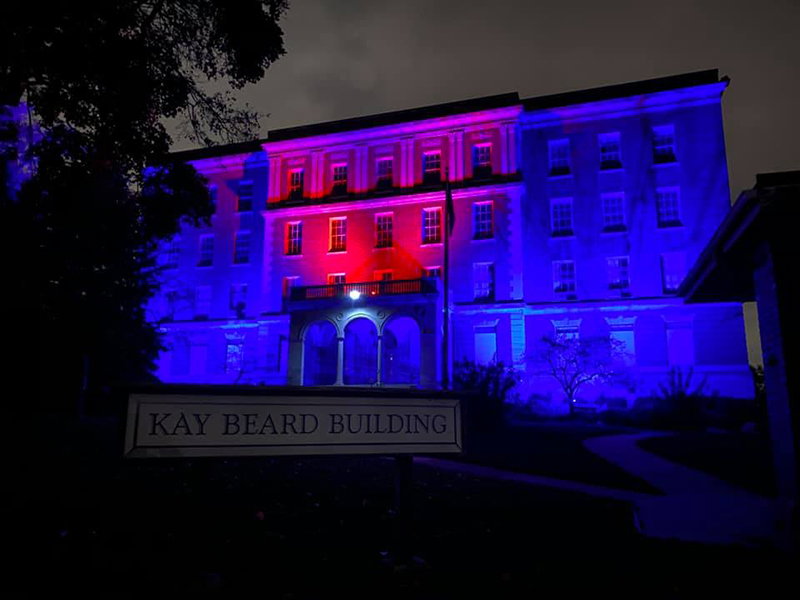
It’s no wonder, then, that Eloise appears on lists of Michigan’s most haunted spots. Paranormal groups have taken notice, including MichiGhost Paranormal, now headquartered in the Kay Beard Building.
After the main hospital closed in 1984, most of the complex was demolished, making way for a golf course, condos, and strip mall shops. All that remains is a crumbling power plant, a cemetery with more than 7,100 unclaimed residents’ graves “marked only by numbered blocks,” and the 54,000-square-foot Kay Beard Building. Formerly known as Building D, the structure housed both psychiatric patients and administrative offices.
The remnants stood abandoned until 2015, when they went up for sale for $1.5 million. In 2018, Wayne County sold the property to developers for just $1. Today, the space lives on as Eloise Asylum, where its dark history has become part of the attraction.
Hollywood-Quality Haunts
Since reopening as a haunted house in 2021, Eloise Asylum has faced criticism for trivializing the experiences of the hospital’s former patients. But Smith argues that the building’s use doesn’t negate the staff’s respect for the hospital’s history — and in fact helps preserve the site.
“The one good thing is it brings attention to the place, or it probably would have closed down permanently,” he says. “We do take care of the place. We go out there every week and take care of the gravesites across the street at our cemeteries. If we weren’t here, none of that would have happened. We do offer history tours to help educate the public and keep the memories alive. And in order to fund all of that, we do the haunted house. But there is a lot of good behind it all.”
This year, in addition to upgrading 26 items inside the haunt, the team brought in more actors, a Hollywood makeup artist, additional food vendors, and a 33-foot projection screen to provide Halloween-themed in-line entertainment.
The haunt runs through Nov. 1, with extended hours following regular sellouts last year. A rock concert, featuring local talent such as Marz Radio and Mob Opera, caps off the season on Oct. 30.
Soon, Eloise plans to stay active beyond Halloween.
According to Smith, future plans involve operating the site’s escape room (which won a Best of Morty Award in 2024) year-round, alongside paranormal and historical tours. He also plans to open the second floor for private events.
The tours may someday offer an even creepier experience than the haunted house. Eloise’s architectural plans reveal nearly 1.5 miles of tunnels beneath the Kay Beard Building. Previously used to transport patients across the sprawling complex, they have long been sealed off — but staff believe they’ve found an entrance.
Smith refers to the tunnels as “catacombs” and claims they hold approximately 8,000 bodies buried in mass graves. After taking safety precautions, MichiGhost hopes to eventually lead paranormal investigations through the catacombs alongside the main building and cemetery. Standard historical tours will remain available for those who want to skip the spooks.
As for the ghosts? Smith is a skeptic, although he admits that parts of the building feel strange. He recalls recently stepping into a room thought to be a 19th-century murder site, “and it just felt weird,” he says. “I went to take a step, and my foot just acted weird. It felt like I was in quicksand.”
Eloise may have found new life as a haunted house, but its most chilling stories don’t come from actors, animatronics, or special effects. They’re part of the building itself, remnants of a history still being uncovered.
Book haunt tickets, a paranormal tour, or other spooky experiences at eloiseasylum.com.
|
|
|
|
|
|