If you visited Detroit in fall 1953, maybe you came to Briggs Stadium to catch a Detroit Lions game during their second NFL Championship Game-winning season in a row. Or maybe you came to Olympia to see the Detroit Red Wings, the squad that would take down Montreal in Game 7 to win the Stanley Cup in April 1954.
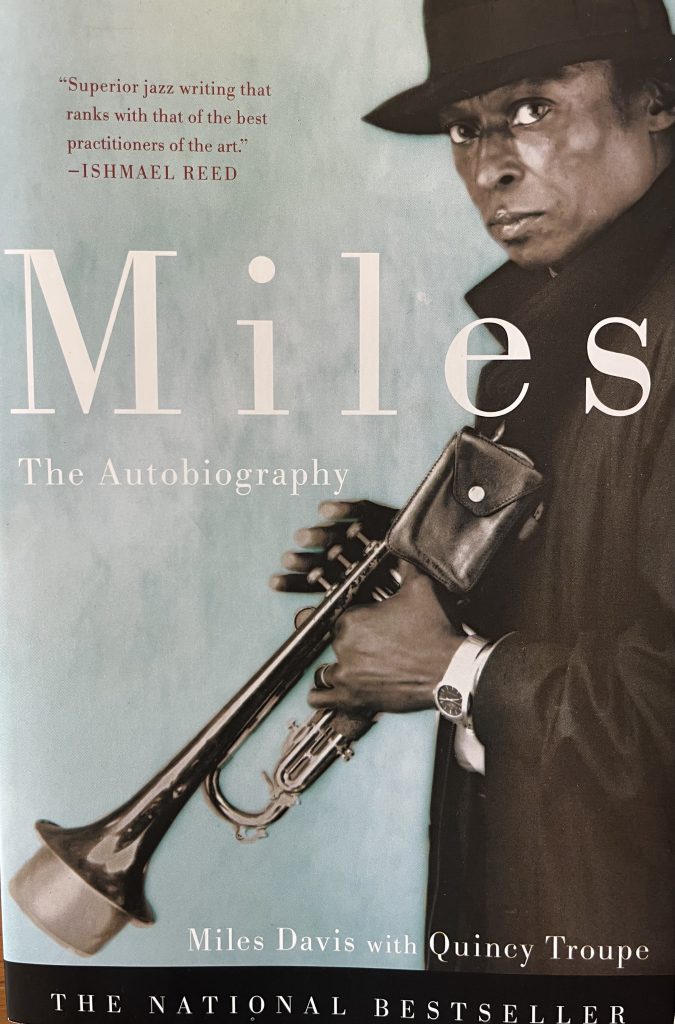
If you were trumpeter Miles Davis, you came to Detroit for the heroin. The cheap, crappy Motor City heroin.
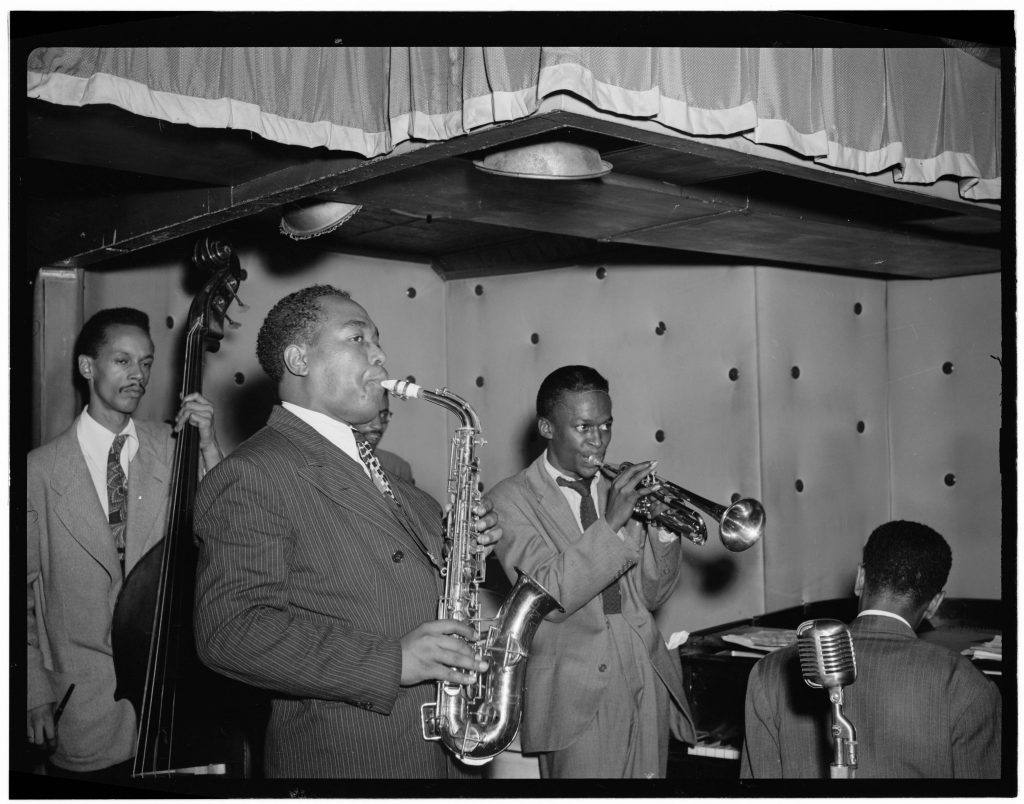
This was the same Miles Davis who — beginning in 1945, when he was just 19 — played three years in the quintets of sax great Charlie Parker. The same Miles Davis who had finished second to Maynard Ferguson as the best trumpeter in jazz in DownBeat magazine’s 1952 readers’ poll.
But Davis had been busted in Los Angeles on a narcotics charge in September 1950 while playing with Billy Eckstine’s band. His arrest, the news coverage of his drug use, and his growing addiction to heroin made him almost unemployable.
He would struggle with alcohol and cocaine until he died in 1991, but both were manageable compared to his battle against the needle. In the Motor City, Davis finally got clean.
Down and Out in Detroit
The trumpeter’s 100th birthday on May 26 provides an ideal time to look back to Detroit in fall 1953, when Davis, then 27, rolled into town.
Known for its sports teams and booming post-war automobile industry, Detroit was also a burgeoning jazz mecca. Twenty-eight jazz spots opened in Detroit during the 1950s, joining nearly two dozen that had debuted in the ’40s. Local luminaries like guitarist Kenny Burrell, drummer Louis Hayes, vocalist Sheila Jordan, and bassist Ron Carter were poised on the lips of national renown.
But Davis was scuffling. His club dates had dried up. He played in public once between August and December 1952. In 1949 and 1950, his nonet recorded the tracks that would become the legendary Birth of the Cool, but the album wasn’t released by Capitol Records until 1957.
Two times in 1953, Davis tried to sober up at his father’s farm in Alton, Illinois, north of St. Louis. After the second effort failed, he headed for the Motor City. “I figured that even if I did backslide a little, then the heroin that I would get in Detroit wasn’t going to be as pure as what I would get in New York,” said Davis in his autobiography. “I figured that this could help me and I needed all the help I could get.”
Davis was putting words to pure junkie logic — that doing heroin would somehow help him kick heroin.
Despite the monkey on his back, musicians and fans welcomed Davis to the scene.
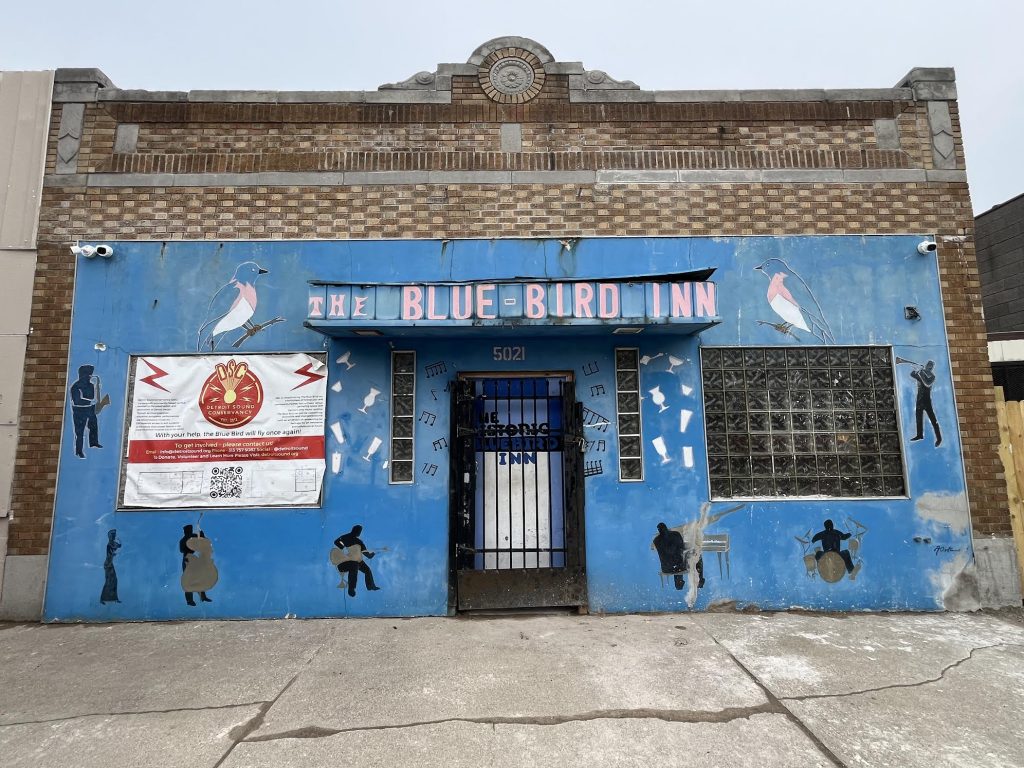
The dapper Clarence Eddins, co-owner of the Blue Bird Inn at 5021 Tireman Ave., hired Davis to play in the house band led by saxophonist Billy Mitchell — and lent him clothes.
Davis ensconced himself in the Sunnie Wilson Hotel near the intersection of Grand River Avenue and West Grand Boulevard, one of the establishments that catered to Black entertainers.
He soon hooked up with a drug dealer named Freddie Frue, and his addiction deepened.
By November, strung out and broke, he would walk eight blocks to the Blue Bird for his gigs, where local trumpeter Willie Wells often played circles around him.
Things got so bad that Davis pawned his horn for drug money. He had managed to hang onto his mouthpiece and began borrowing the trumpet of Lonnie Hillyer, who lived near the club. Hillyer, barely a teen, would soon study under the great bebop pianist Barry Harris, a mentor of Detroit jazz musicians.
One night, Hillyer’s mom confronted Davis onstage and snatched back her son’s horn. “If he’s such great trumpet player, how come he does not have his own trumpet?” she asked the audience.
In another version of the story, Mrs. Hillyer allowed Davis to borrow Lonnie’s horn on the condition that he returned it to the Hillyer home each night.
The Detroit Detox
There is always a mystery about why one attempt at recovery suddenly works when so many earlier attempts have failed.
In Davis’s case, four intertwined factors helped straighten him out. The poor quality of Detroit heroin played a role. “(S)hooting it wasn’t doing nothing for me except putting more holes in my arms,” Davis said.
Appalled at the way Davis treated his girlfriends, a local gangster called him a “pathetic, pitiful, miserable” junkie who didn’t “deserve to live” — and helped shame him straight.
One of the trumpeter’s few idols was boxing legend Sugar Ray Robinson. “Sugar Ray looked like a socialite when you would see him in the papers getting out of limousines with fine women on his arms, sharp as a tack,” Davis said. But when Sugar Ray was training for a fight, he was 100% business. “I decided that was the way I was going to be … Sugar Ray was the hero-image I carried in my mind.”
Besides his fights, Robinson’s only connection to Detroit was the fact that at age 11, he had lived on the same street as Joe Louis, then 17. But the boxer set an example that Miles needed.
Detroit’s talented jazz players also gave Davis a boost.
“There were some good musicians in Detroit, and I was starting to play with some of them,” Davis said. “That helped me and a lot of them were clean. A lot of musicians in Detroit looked up to me because of all the things I had done. And so, one of the things that made me stay clean was that they did look up to me and since they were clean it made me want to stay that way.”
The cleaner Davis got, the more he played, and the better he sounded.
“I really felt good for the first time in a long time,” Davis said. “My chops were together because I had been playing every night and I had finally kicked heroin.”
His gigs with Pontiac-born drummer Elvin Jones packed the Blue Bird.
“[Singer] Betty Carter used to come and sit in with [saxophonist] Yusef Lateef, [pianist] Barry Harris, [trombonist] Curtis Fuller and [trumpeter] Donald Byrd,” Davis said. “It was a really hip city for music.”
The handful of months Miles spent in the Motor City in the early 1950s eventually enabled him to revolutionize jazz at least three times over the next four decades. He had already tamed bebop. By 1957, his blooming fame led Capitol to collect his nonet’s 7- and 8-year-old recordings and release them as Birth of the Cool, helping to ignite the cool jazz revolution. Davis replaced chords with scales as the basis for improvising and introduced fans to modal jazz with Kind of Blue in 1959.
In Detroit, Miles said goodbye to his own hedonistic Mr. Hyde. Four years later, he celebrated his rebirth as “Dr. Jekyll” in the opening song of Milestones.
This story originally appeared in the May 2026 issue of Hour Detroit magazine. To read more, pick up a copy of Hour Detroit at a local retail outlet. Click here to get our digital edition.
|
|
|
|
|
|