1. Old Indian Trail (near Sleeping Bear Dunes)
Once used by Native Americans to connect hunting and fishing sites, Old Indian Trail takes visitors on loops through dunes and wooded areas, some of which offer a challenging trek. Feeling adventurous? Consider taking on the Sleeping Bear Dunes National Lakeshore Trail Trekker Challenge. The challenge offers “a prize and bragging rights” to anyone who hikes all 13 trails in the area, rated from “easy” to “strenuous,” within one year. To accommodate seasonal weather, horseback riding, snowshoeing, and skiing the trails count. Participants must download and bring the required booklet, found at nps.gov.
2. Grand River Trail
Commonly traveled today, this trail is now Interstate 96 (I-96) and once included U.S. 16. It extends from Detroit through Lansing to Grand Rapids and northwest to the shores of Lake Michigan near Muskegon. By car, the drive from Grand Rapids to Detroit takes about three hours at 70 mph. Michigan’s indigenous people traveled it on foot.
3. Great Sauk State Trail
Originally created by bison migration, the Great Sauk State Trail extends west from Detroit beyond Chicago, ending at the Mississippi River in Rock Island, Illinois. This trail was used to establish the first stagecoach line between Chicago and Detroit.
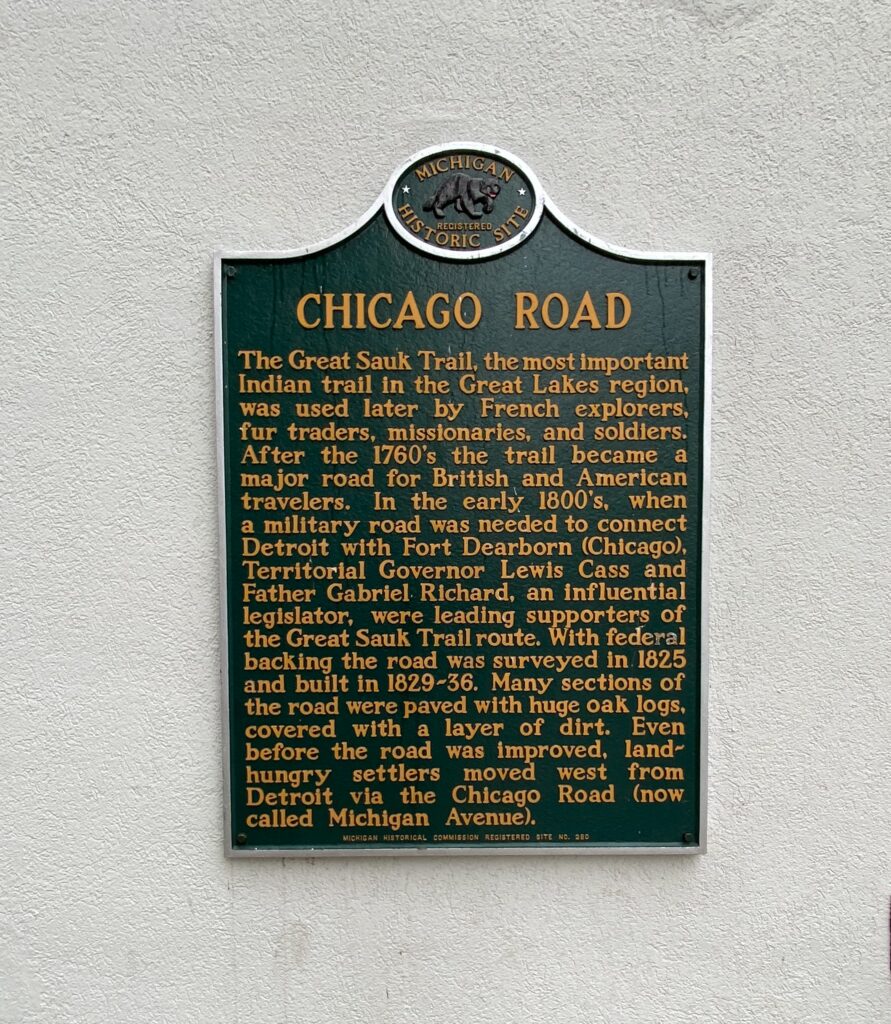
4. Saginaw Trail
The oldest and most used of Michigan’s indigenous trails, the Saginaw Trail extends from the straits of Detroit to Saginaw, passing through cities such as Royal Oak and Flint. It began as mud, marshes, and miles of thick trees and foliage. Today, the section of the trail within Oakland County includes parts of Woodward Avenue and the Dixie Highway. A historic marker for the trail is located on the Jason Almon Starr House property in Royal Oak.
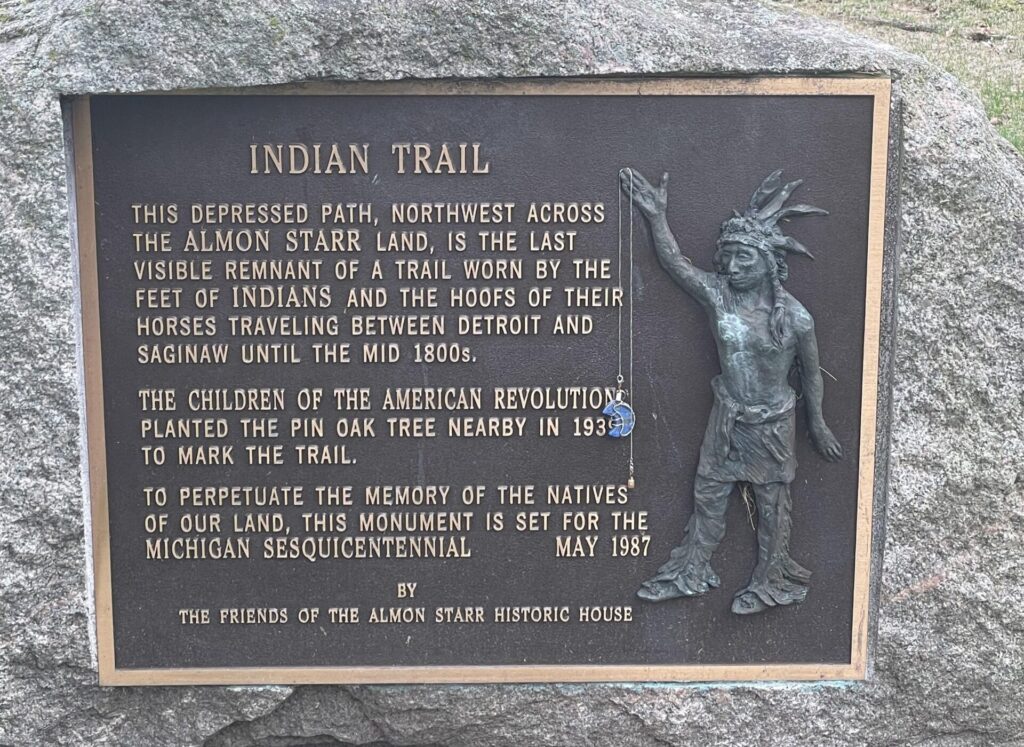
5. Shiawassee Indian Trail
At the intersection of Shiawassee and Inkster in Oakland County’s Farmington Hills stands a trail marker erected in 1987. It reads, “Along this road ran the route of the Shiawassee Indian Trail through Farmington Hills. …” The sign honors the historic trail that extended from the Detroit River to the center of Michigan. Portions of M-59 and U.S. 23 lie along the Shiawassee Indian Trail.
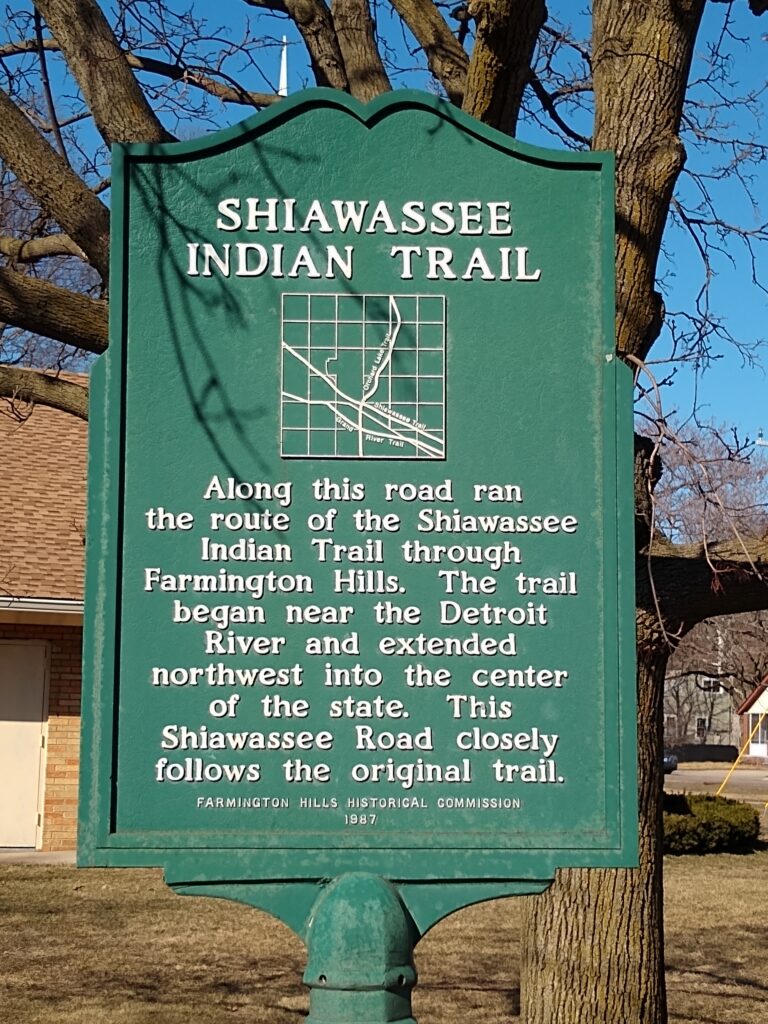
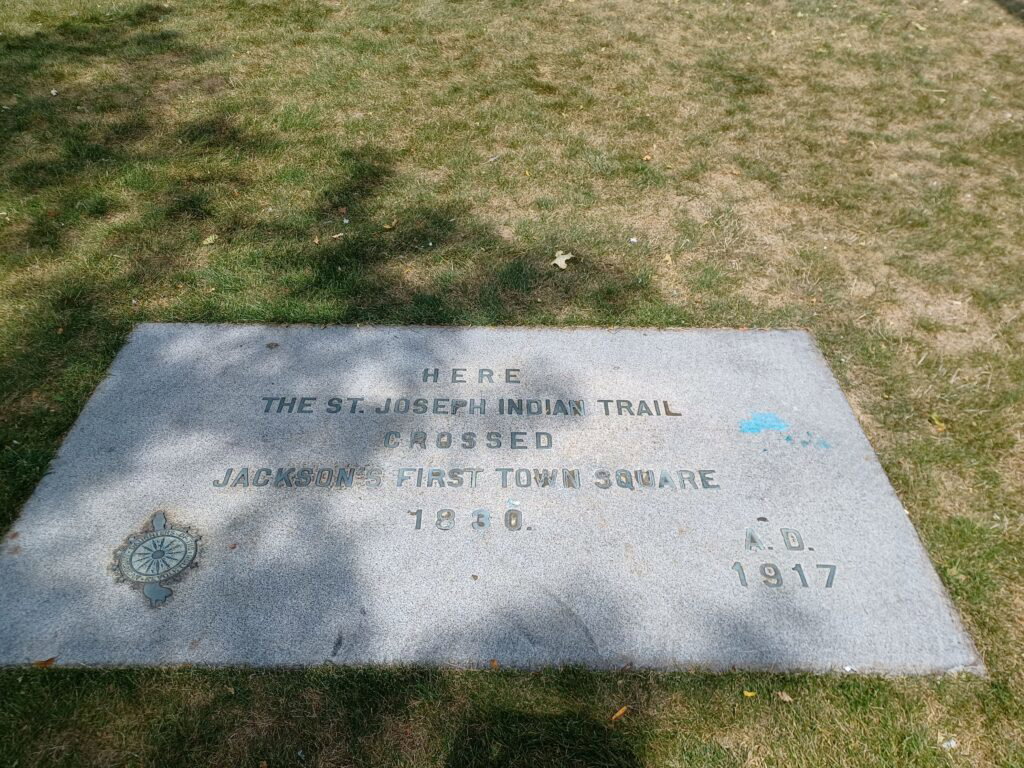
6. St. Joseph Trail
Called the most historically important of the trails, this route runs east to west across lower Michigan, from the mouth of the St. Joseph River to Ann Arbor, and connects to Detroit. When Michigan became a state in 1837, the trail became Territorial Road. Today, much of I-94 and US 12 is located there.
7. Mackinac Trail
First used by indigenous peoples, this trail became a much-traveled path for British and French fur traders. Today, it is covered and paralleled by I-75.
8. Cheboygan Trail
This ancient trail runs east through forested sections of northern Michigan to the Straits of Mackinac.
9. Sand Ridge Trail
Extending from Saginaw to Port Austin in “the thumb,” this trail was first used for seasonal hunting and fishing. It connected the villages of Indigenous peoples along the shoreline.
10. Pontiac Trail
The original pathway begins south of Orchard Lake and extends to major trail intersections near Ann Arbor.
This story originally appeared in the October 2026 issue of Hour Detroit magazine. To read more, pick up a copy of Hour Detroit at a local retail outlet. Click here to get our digital edition.
|
|
|
|
|
|