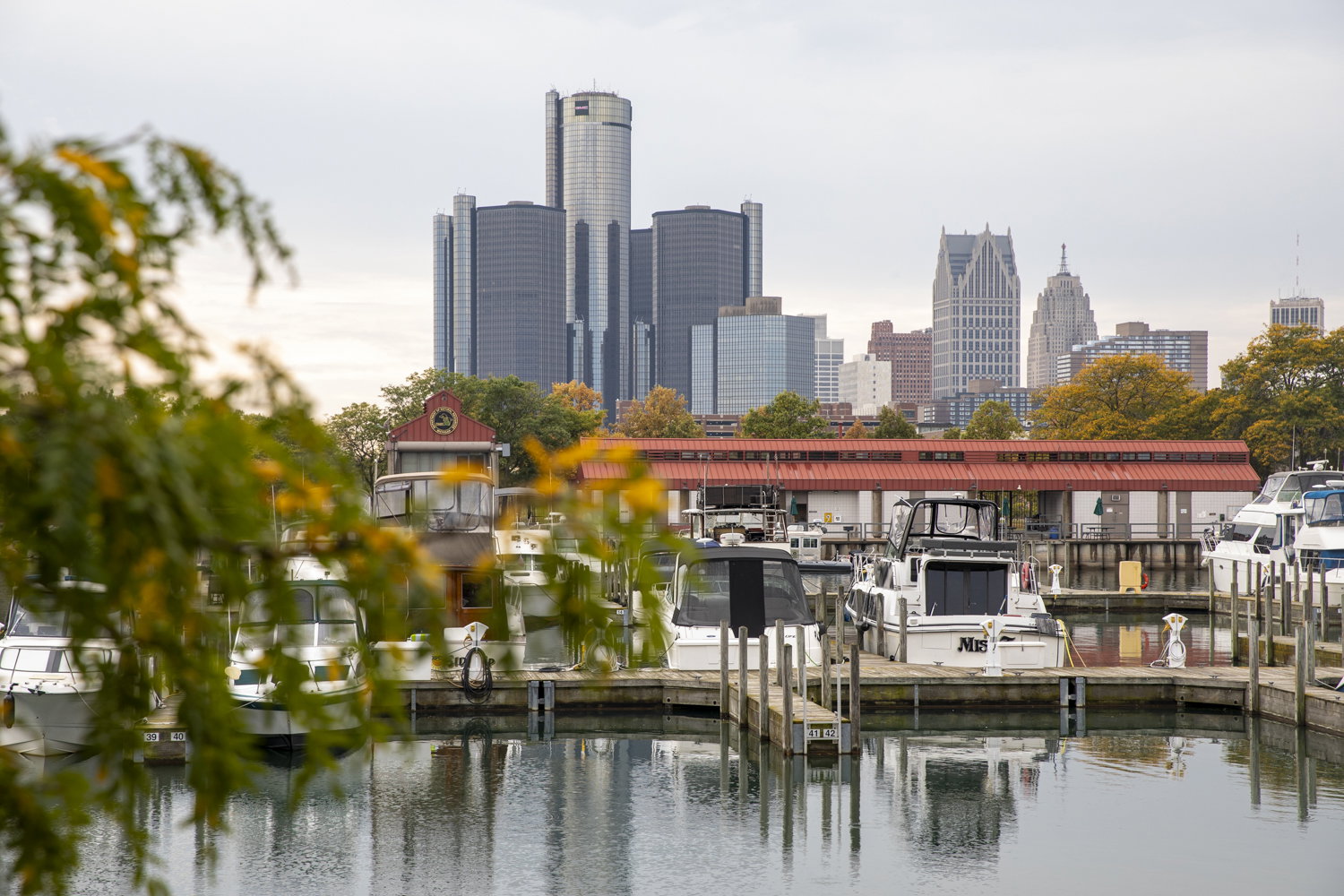
Thousands of bodies of water shape the landscape of metro Detroit. Bordered by two Great Lakes — which are connected by the Detroit River, Lake St. Clair, and the St. Clair River — and peppered with hundreds of inland lakes, rapid rivers, and scenic creeks, this region boasts some of the state’s best places to live and visit. Here, we dive into five different waterways and take a look at cities and towns near them that make the most of their locations.
Detroit
Whether you’re a sports fan who wants to walk to Ford Field, Comerica Park, or Little Caesars Arena on game day or you’re drawn to cities with a vibrant bar, restaurant, and arts scene, Detroit offers just about everything you need at a relatively manageable cost. In its most recent ranking of the best cities to live in the U.S., Money magazine included Detroit in its top 50, citing its affordability and ongoing commitment to restoring the “gritty Great Lakes city to its former glory.”
What truly sets Detroit apart, though, is its connection to nature — especially the Detroit River, the city’s pièce de résistance.
The completion of the Detroit Riverwalk and Greenways in 2025 makes riverside activities and events much more accessible by foot or bike. And the riverfront’s newest addition, the 22-acre oasis of Ralph C. Wilson Jr. Centennial Park, features two full-size basketball courts, an enormous playground with cool slides, a water garden with trails, and green space.
For the most part, living directly on the river in Detroit means residing in an apartment or condo. Options include Riverfront Towers (which is near a new boardwalk connected to Ralph C. Wilson Jr. Centennial Park), The Residences Water Square (steps from the Riverwalk), and Harbortown (a 35-acre development with a private marina, tennis courts, and more). Located farther east, Grayhaven Marina Village apartments sit on a series of lagoons with boat slips.
Must-do: Take advantage of Belle Isle, a 982-acre state park. On this Detroit River island, you’ll find hiking paths, an aquarium, beaches, a nature center, a conservatory, a lighthouse, a yacht club, and more. Tenchi Wayner, who grew up in southwest Detroit, drops her rod into the Detroit River from the shores of Belle Isle at least once a week when the weather’s good. “I catch perch mostly but have caught bass, catfish, bowfin, and small gar,” she says. Remember to look up — Belle Isle is birding central, and you’re bound to spy everything from bald eagles and osprey to cedar waxwings. “I love to picnic here,” says Taylor Doran, a 20-something Brush Park resident who works in real estate. “They really keep up and maintain Belle Isle so well.”
Get your bike ready for the yet-to-open, 1.6-mile-long Gordie Howe International Bridge, connecting Detroit and Windsor. The bridge has an 11.8-foot-wide multiuse path, allowing pedestrians and cyclists to cross about 150 feet above the Detroit River safely separated from the six lanes of vehicle traffic.
Waterfront dining: Casual, eclectic fun awaits at Coriander Kitchen and Farm, located in the canal district on Detroit’s far east side. “We had no idea where we were going when we drove to Coriander for the first time,” Doran says. “You go through little neighborhoods and side streets and end up in a cool canal area. The cocktails are great, very fresh.” Once a marina, the restaurant and bar now serves everything from unstuffed cabbage rolls and grilled walleye to green curry mussels. Sign up for a Paddle-to-Table Dinner, where you can explore the canals by kayak and end the day with an intimate waterside dinner.

Grosse Ile
The scenic Grosse Ile, the largest island in the Detroit River, is known for its historic charm, quiet residential atmosphere, top-rated schools, parks, boating, and waterfront lifestyle. Named by French explorers in 1679, Grosse Île means “Big Island.” Its real estate market offers a diverse mix of homes, from charming historic cottages to custom-built riverfront estates.
Vanessa Chaverri-Gratz and her husband, Josh Gratz, have lived all over the United States for work, but in recent years, they’ve found themselves in remote-work positions, allowing them to live anywhere. As they scrolled through real estate listings, they stumbled upon a historic Tudor-style home in Grosse Ile. Shortly afterward, they came to Michigan for a wedding. On a whim, they decided to go look at the nearly 100-year-old home. “We fell in love with it and put an offer in the next day,” Chaverri-Gratz says. “We thought, why not?”
She finds Grosse Ile to be a quiet, friendly community that feels rural. “People here are neighborly and they look out for each other,” she says. Since moving to town, she has updated the couple’s home into a stylish haven that will soon be the subject of a book, The Collected Home, to be published in 2027 by Gibbs Smith.
Must-do: You can access the island via two bridges and, of course, by boat. Take a day trip to explore its many charms.
The old Michigan Central Railroad Depot (built in 1904) is now the location of the Grosse Ile History Museum, where you’ll find artifacts of the island’s past. The Customs House reflects early-20th-century home life. St. James Episcopal Church (built in 1867) and six mid-19th-century homes north of the chapel also attract history lovers. If you’re into lighthouses, check out the Grosse Ile Lighthouse, a prominent landmark on the northeastern shore constructed in 1894.
Nature buffs will want to take to the trails at any of the island’s many parks, including Sunrise Park, a popular spot for kayaking and canoeing. The Bayview Trail, a half-mile loop at the southern end of the island, is known for birding and scenic views. The Meridian Woods Trail winds through forest, and the paved Grosse Ile Trail runs most of the length of the island.
More Waterfront Living in Metro Detroit
A Day Trip Downriver
Lake St. Clair
Huron River Waterway
Northern Oakland County’s Waterways
Western Oakland County’s Lakes
This story originally appeared in the July 2026 issue of Hour Detroit magazine. To read more, pick up a copy of Hour Detroit at a local retail outlet. Click here to get our digital edition.
|
|
|
|
|
|