Much like Ray Kinsella in the classic 1989 film Field of Dreams, the forces that helped make the Kirk Gibson Center for Parkinson’s Wellness a reality were motivated by a singular phrase: “If you build it, they will come.”
Upon opening its doors in Farmington Hills in October 2025, the center, also known by the shorthand KGC, introduced a world-class, state-of-the-art facility to metro Detroiters living with Parkinson’s disease. The center also serves individuals diagnosed with other movement disorders, including progressive supranuclear palsy, Lewy body dementia, corticobasal degeneration, and multiple system atrophy.
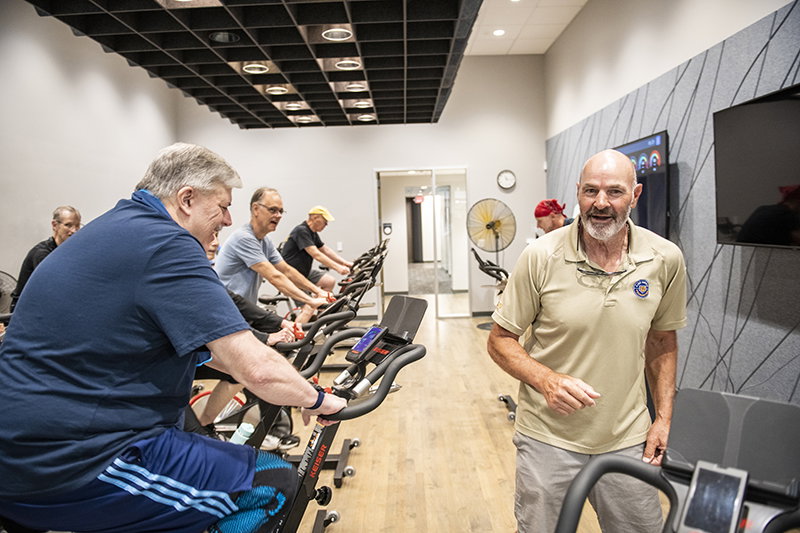
With a physician’s approval, members undergo an assessment to identify their current abilities and limitations. These assessments, which occur every six months, determine each member’s program level. In total, there are four difficulty levels. The KGC offers a wide variety of exercise and educational programs at varying levels that help with movement, memory, and cognition. These programs include speech and handwriting classes, tai chi, spinning, cardio drumming, and PWR! Moves®, which stands for Parkinson Wellness Recovery and focuses on exercises that improve mobility, balance, strength, and everyday movement.
Gibson, who was diagnosed with Parkinson’s in 2015, takes classes at the center himself, and he definitely has a favorite.
“I like to come in here when tai chi is going on; that’s what I’m doing the most of right now,” the Tigers legend said when Hour Detroit visited the KGC in August. “I’ll spin, [too]. I just like to get in and be part of the membership. I want them to feel comfortable around me, and I want them to trust me [in] that we’re looking out for their best interests.”
Best of all, these programs are free of charge for those living with Parkinson’s and other movement disorders. For the roughly 8,000 metro Detroiters diagnosed with Parkinson’s, the KGC is a game-changing resource. The cause of the nervous system disorder is still unknown in many cases, and there currently isn’t a cure. However, inside the warm and welcoming KGC, staff and members exude palpable hope and resilience.
The Need for Expansion
In August, the KGC celebrated a major milestone just two months shy of its first anniversary with the opening of a new, 2,700-square-foot multipurpose gymnasium inside the center. A $1 million gift from Amy and Daniel Loepp, the treasurer and president of the Daniel J. Loepp Family Foundation, made the space possible. The gym’s name honors Robert A. Loepp Sr., Daniel’s father, who lived with Parkinson’s for more than a decade.
For Loepp, the former president and CEO of Blue Cross Blue Shield of Michigan, involvement with the KGC is understandably personal.
“Oftentimes, people like my dad would watch television on the couch and were in assisted living,” Loepp says. “There was nothing [like this center], really. This place would have been perfect for him.”
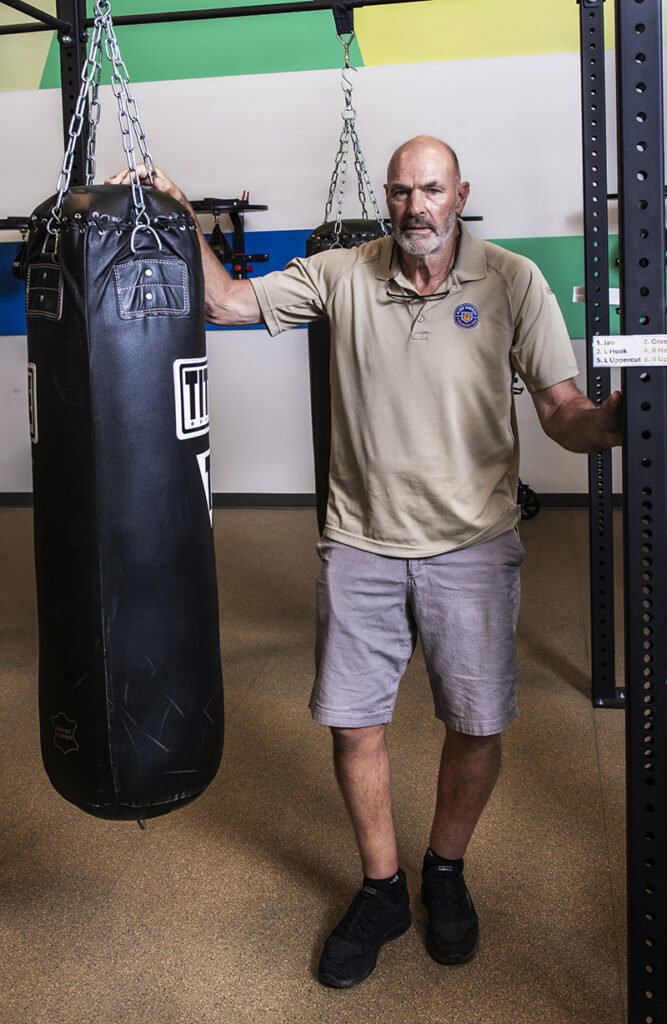
The new gymnasium’s opening comes at a crucial time for the center, as memberships have well exceeded first-year estimates. At the gym’s ribbon-cutting ceremony, Mary Lynn Foster, CEO of the KGC shared that as of August, 1,371 members had completed their orientation, and nearly 1,200 members had taken their first class at the center.
Initial projections for the first year of operation estimated 800 members. The center also set a goal to provide 70 class sessions per week. The KGC has crushed that goal, now offering more than 170 class sessions per week.
“Honestly, a year ago, I was wondering, ‘Will people come?’ We just weren’t sure,” Foster says. “I thought by this past December, the numbers were climbing, but it’s going to level off. It hasn’t. At some point, it will, of course. But every day, we’re focused on what else [we can] do for the members.”
The $1 million gift has not only created additional space, but it will also allow the center to hire more coaches to offer more classes.
“The coaches hired by the center typically hold various accreditations, including an advanced degree in physical therapy and/or certification as being a trained fitness instructor, along with being PWR! Certified, which is a specialty Parkinson certification,” Foster says. “The generous gift from the Loepps will also allow us to train additional coaches in PWR!, hence the ability to offer more PWR! Moves classes.”
This gift came at the perfect time, especially since the KGC recently started offering weekend classes to better serve the schedules of its members and their family and friends, who often provide transportation.
Surprising Success with a Promising Future
The KGC is doing something almost unheard of in the medical nonprofit organization world: getting nonprofits to work together. Nonprofits with similar goals typically compete for the same grants or other funding. Recently, the KGC began working with the Michigan Parkinson Foundation, which relocated its independent offices from Bingham Farms to the center and opened to the public on Sept. 8.
“As I’ve seen in all the civic things that I did when I was CEO of Blue Cross, oftentimes, it’s hard to get like-minded groups together, whether formally or informally,” Loepp says. “They’ve crossed that path now. That’s a big deal. … So now, the focus is on Parkinson’s patients in one building, and that’s pretty cool.”
Gibson recalled, “When I suggested that we bring in Michigan Parkinson Foundation, it was not a popular idea. We look at ourselves sometimes as teams. I got my Tiger hat on; you got your Yankee hat on. But the reality of it is, if baseball is good, it’s good for everybody. I was always taught that there was more value working together and trusting each other than [being] by yourself.”
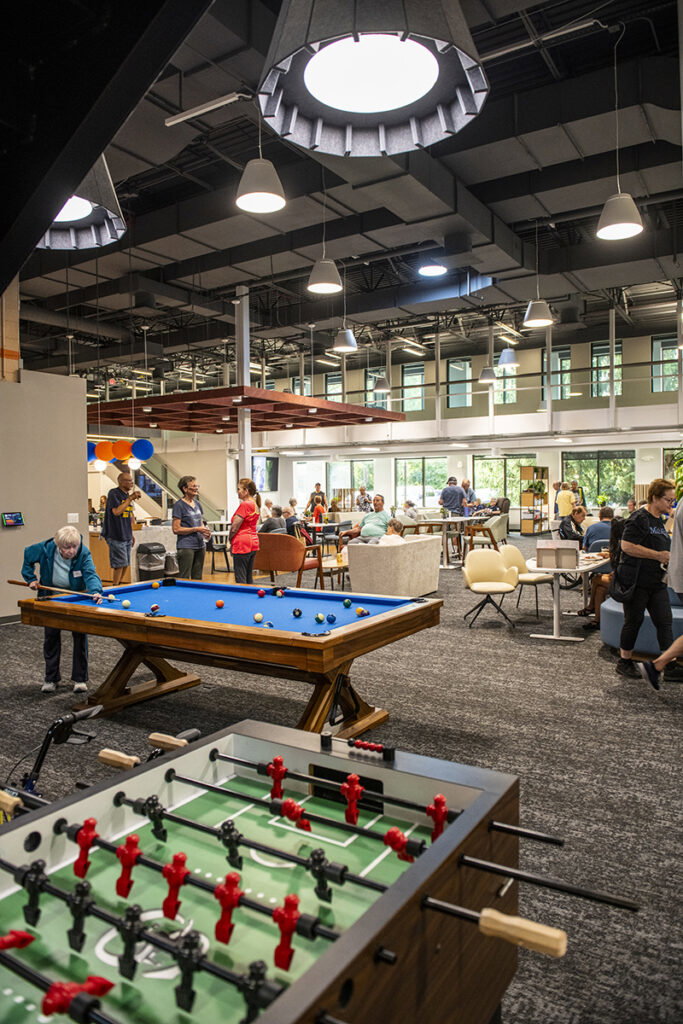
By accomplishing this feat, the KGC looks ahead to a strong future. While opening additional centers isn’t on the horizon right now, Foster indicated a willingness to work with other groups in the state to help provide a “blueprint” of services. Loepp also noted that out-of-state groups have reached out to the center.
“The buzz is out there; there’s no doubt about it,” Loepp says. “Gibby’s a terrific ambassador. He’s not a figurehead. He knows his stuff.”
Gibson’s outlook for the center is about as powerful as Mary Schroeder’s iconic Detroit Free Press photo following his three-run homer in Game 5 of the 1984 World Series.
“I’m here to tell you, there is a Parkinson’s revolution going on within this,” Gibson said. “Not just our country but in the whole world. It’s going to happen. We’re going to make great strides more than we already have.”
For more information or to donate to the Kirk Gibson Foundation for Parkinson’s, go to kirkgibsonfoundation.org.
This story originally appeared in the October 2026 issue of Hour Detroit magazine. To read more, pick up a copy of Hour Detroit at a local retail outlet. Click here to get our digital edition.
|
|
|
|
|
|