From the late ’60s through early ’70s, Motown Records artists contributed to a defining sound that would reshape music, culture, and fashion. Dubbed the label’s Psychedelic Soul Period, its influence was felt for decades to come.
Guests can now experience that history at Psychedelic Soul — A Journey Through Rhythm & Time, presented by the Motown Museum at the nearby Esther Gordy Edwards Centre for Excellence. It is the first official exhibit in the space.
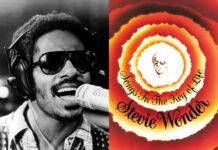
The guided tour walks through a significant turning point for Motown. Guests can hear the synths from Stevie Wonder’s “classic period” and examine equipment like the pressing machine used by Motown’s engineering department. There is also a video component.
“This is an opportunity for us to tell a Motown story in a new way and in a new space,” says Robin Terry, president and CEO of the Motown Museum. “It was important to us and important to the community that we stay connected, even during this period when Hitsville is on pause for construction.”
The center, which opened last May, is named for Terry’s late grandmother, Esther Gordy Edwards, who founded the Motown Museum in 1985. Museum tours are currently paused as it undergoes a $75 million expansion project, scheduled for completion in 2027.
Psychedelic Soul: A Journey Through Rhythms and Time opens Friday, April 17, and runs through Sept. 27. Tickets are $15 for standard admission and can be purchased on the Motown Museum website. The Esther Gordy Edwards Centre for Excellence is located just west of the Hitsville USA building at 2550 W. Grand Boulevard, Detroit.
What Happened During Motown’s Psychedelic Soul Period?
Motown’s Psychedelic Soul period took place from 1967 through 1971. The broader genre saw Black soul musicians incorporating musical elements from psychedelic rock. The music also drew influence from the Civil Rights Movement.
“This is a story that we hadn’t really leaned into and it’s such an influential era in the Motown catalog of music,” Terry tells Hour Detroit. “It speaks to …how young America really influenced not only the sound [and] the lyrics, but even the style, the dress …of that era.”
During this time, Motown earned its first three Grammy Awards. The first was for The Temptations’ “Cloud Nine” single in 1968. The second was Dr. Martin Luther King, Jr. — Why I Oppose The War in Vietnam. Released on Motown’s Black Forum imprint, the recording of King’s speech earned the Grammy for Best Spoken Word album in 1971. The third was The Temptations’ rendition of “Papa Was a Rollin’ Stone,” which won three Grammys in 1973.

Remembering Norman Whitfield
Guests may be drawn to the large, oil painting of legendary producer Norman Whitfield, a major force behind Motown’s psychedelic soul period.
“It’s a really amazing technicolor, psychedelic painting that captures the gaze of Norman Whitfield looking into the future, knowing he would be honored today,” says associate curator Kemuel Benyehudah.
The portrait was painted by London-born artist Richard Wilson. Wilson also did the mural of Stevie Wonder on the back of downtown Detroit’s Music Center for the Performing Arts.

Forget the Model T — Heard of the Model D?
Released in 1970, the Minimoog Model D synthesizer was favored by Motown musicians during the Psychedelic Soul period for melodies and basslines. It can be heard on tracks like Marvin Gaye’s “Trouble Man” and The Temptations’ “A Song for You.”

Wah-Wah Guitar
One of the activations invites guests to experiment hands-on with the “wah-wah” guitar effect — which characterized many of the recordings from this era.
It can be heard on the aforementioned “Cloud Nine” by the Temptations. It was also an early Motown entry from Detroit session guitarist Dennis Coffey. He achieved the effect with his Gibson-335 and a Crybaby pedal.
In a 2021 interview for the National Association of Music Merchants’ Oral History program, Coffey recalled an early meeting with Whitfield, when he first showed him the “Cloud Nine.” arrangement. “I happened to have a wah-wah pedal in my bag,” said Coffey. “I pulled it out …And I started playing it and he says, ‘That’s it, that’s what I’m looking for.’”
Other notable Motown session guitarists highlighted from this period include Melvin “Wah Wah Watson” Ragin of The Funk Brothers and David T. Walker.

Psychedelic Fashion
Inspired by icons like Jimi Hendrix and the “Black is Beautiful” movement of the ’60s, Motown artists began to embrace their natural hair and adopt vibrant wardrobes with striking colors and patterns. Guests can get an up-close look at outfits worn by members of The Miracles during this time.

Robin Terry Stays On as CEO
Despite a previous announcement from the museum last October that Dr. Kenya LeNoir Messer had been named to succeed Terry as Motown Museum CEO, Terry has stepped back into the role. “Dr. Messer has moved on to other opportunities,” a museum spokesperson tells Hour Detroit. Additionally, the museum is no longer searching for a new CEO, according to the spokesperson.

|
|
|
|
|
|